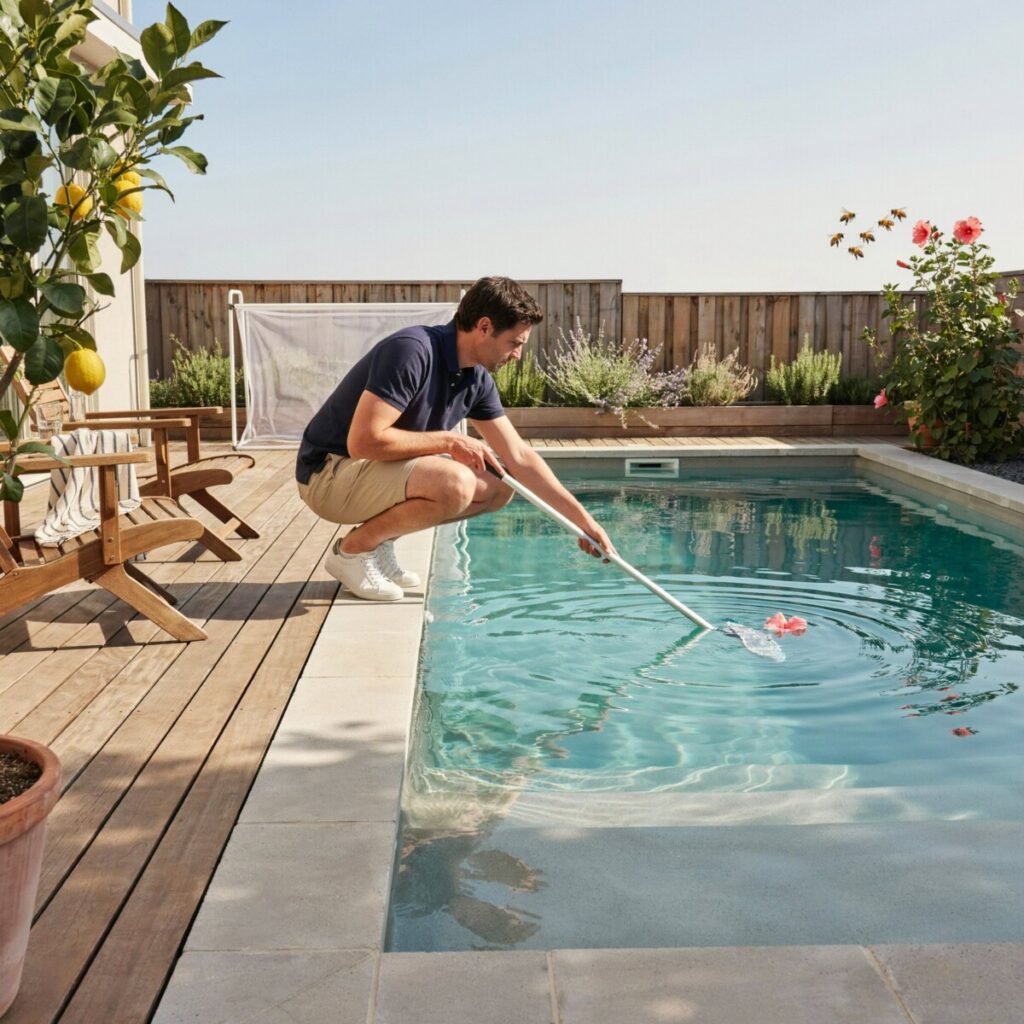
Summer should mean bare feet on warm concrete, cold drinks by the water, and lazy afternoons on the patio. But when bees around your swimming pool turn every cannonball into a negotiation, the fun fades fast. If you’ve been searching for how to keep bees away from your pool and patio area, you’re not alone—and the good news is that you can reclaim your outdoor space without harming the pollinators our gardens depend on.
Quick answer: To keep bees away from your pool and patio, eliminate easy water and food sources, use fans and covers, clean up spills, relocate flowering plants, and provide a shallow water station away from the area.
Bees are vital to ecosystems, food production, and the flowering plants that make our yards beautiful. The goal here is never to kill them. It’s to make your pool deck and patio less appealing while giving bees a better option a few yards away. Below, you’ll find practical, non-toxic strategies, guidance on when to call in help, and clear warnings about what not to do.
Why Bees Are Drawn to Pools and Patios
If you’ve ever wondered why are bees attracted to my pool, the answer usually comes down to three things: water, scent, and shelter.
- Water. During hot, dry spells, natural sources like creeks and dew-covered leaves dry up. Your pool becomes a reliable pool water source for bees. You’ll often spot bees drinking pool water along the waterline or clinging to the skimmer basket.
- Food odors. Sweet drinks attracting bees is a classic patio problem. Open soda cans, spilled juice, sliced watermelon, and even sunscreen with fruity fragrances can draw foragers in.
- Flowers and color. Flowering plants near pool edges or bright floral cushions on bees near outdoor furniture mimic the signals bees use to locate nectar.
- Shelter. Cracks in coping stones, gaps under patio umbrellas, and hollow pool-equipment housings offer ideal nesting spots.
Understanding the “why” makes every deterrent below far more effective.
Identify the Insect Before Taking Action
Not every striped visitor is a honey bee. Knowing the difference changes how you respond.
- Honey bees – Small, fuzzy, golden-brown. Generally docile unless the hive is threatened. They visit pools for water.
- Bumblebees – Larger, rounder, very fuzzy. Ground-nesters. Rarely aggressive.
- Carpenter bees – Shiny black abdomen, hover near wood structures. Bore into softwood but don’t form large colonies.
- Wasps and hornets – Smooth, narrow-waisted, brighter yellow-and-black banding. More aggressive around food.
- Yellow jackets – A type of wasp. Yellow jackets near pool areas are common in late summer when colonies peak and protein/sugar cravings spike.
Wasps vs. bees around pool settings is an important distinction: wasps and yellow jackets are more likely to sting unprovoked and are attracted to meats and sugary drinks, while most bees simply want a sip of water or are passing through to a flower bed. Misidentifying a yellow jacket nest as a bee hive can lead to the wrong removal approach.
[Read our guide to natural ways to keep wasps away from your backyard]
10 Safe Ways to Keep Bees Away From Your Pool
These safe ways to deter bees focus on prevention and require no chemicals.
- Remove standing water. Empty plant saucers, birdbaths you’re not using, and clogged gutter puddles so the pool isn’t the only moisture source.
- Repair dripping faucets and hose bibs. A slow drip on the pool deck creates a mini watering hole.
- Keep the skimmer basket clean. Bees gather at the waterline; a well-maintained skimmer reduces the surface area where they land.
- Run the pool pump during peak heat. Moving water is less inviting to bees than still water.
- Cover the pool when not in use. A solid or mesh cover eliminates the open water surface entirely. [Learn how to choose the best pool cover for your home]
- Seal sugary drinks. Use lidded cups or mesh drink covers. Clean up spills immediately.
- Keep trash cans sealed. Outdoor trash cans and bees are a well-known pairing; use tight-fitting lids and rinse recyclables.
- Set up a box fan on the patio. Bees are weak fliers; a gentle breeze makes hovering difficult.
- Avoid floral-scented soaps, lotions, and candles near seating.
- Use a pool cover or mesh food tent over snacks whenever you step away from the table.
These steps stop bees from gathering near pool edges without a single spray.
How to Keep Bees Away From a Patio and Outdoor Dining Area
The patio presents its own set of attractants. To keep bees away from patio gatherings:
- Wipe down the table and chairs after every meal. Even a thin film of marinade or fruit juice can register on a bee’s antennae.
- Store cushions and throws indoors or in a sealed bin when not in use; fabric can trap sweet odors.
- Check bees around patio umbrella ribs and joints. Tighten any loose hardware so gaps don’t become nesting nooks.
- Position outdoor trash cans and bees attractants at least 15 feet from the dining area, downwind if possible.
- If you have a hummingbird feeder attracting bees, move it to the far side of the yard or switch to a saucer-style feeder with bee guards.
A few small habit changes go a long way toward a bee-proof patio area.
Create a Bee-Friendly Water Station Away From the Pool
This is the single most effective long-term strategy for homeowners dealing with bees drinking pool water. Give them a better option.
How to build one:
- Choose a shallow saucer, terracotta plant tray, or wide bowl.
- Fill it with clean water and add pebbles, marbles, or cork slices so bees have landing pads and can’t drown.
- Place it 20–30 feet from the pool, ideally near a flower bed or shrub border.
- Refresh the water every two to three days to prevent mosquito larvae.
- Add a pinch of sea salt or a drop of sugar water initially to attract scouts.
Once foragers discover the station, traffic at the pool typically drops within a week. You’re still supporting a bee-friendly backyard while protecting your swim time.
Landscaping Changes That Reduce Bee Activity Near Seating Areas
Strategic planting is one of the smartest forms of outdoor bee control.
- Move flowering plants away from the pool and patio. Relocate lavender, clover, and other high-nectar blooms to the perimeter of the yard.
- Avoid overly fragrant blooms immediately beside seating areas. Roses, jasmine, and lilacs are beautiful but act as bee magnets within a few feet.
- Prune dense shrubs that touch the house or pool fence; they can hide ground nests.
- Choose low-pollen ornamentals (ferns, hostas, ornamental grasses) for planters within 10 feet of the deck.
- Mow clover and dandelions in the lawn near the patio before they flower.
- Place pollinator-friendly plants farther from the patio or pool, ideally along a back fence line, so foraging traffic bypasses your entertaining zone.
You don’t have to eliminate flowers—just create distance between blooms and where you sit.
Natural Bee Deterrents: What Works and What to Avoid
There’s no shortage of advice online about how to repel bees outdoors. Here’s an honest look.
What can help (temporarily):
- Fans. A steady breeze disrupts flight paths.
- Citronella for bees: Citronella candles or torches may mildly discourage bees, though they’re formulated more for mosquitoes. Don’t rely on them as a sole solution.
- Essential oils for bees: Peppermint, eucalyptus, and clove oil are often cited as natural bee repellents. A few drops on cotton balls placed away from seating may reduce visits, but concentrations high enough to truly repel can also harm pollinators, irritate pets’ respiratory systems, or damage plants. Use sparingly and never spray directly on bees.
- Physical barriers: Screen enclosures, patio curtains, and mesh food tents are the most reliable bee deterrent for patio use.
What to avoid:
- Aerosol “bug bombs” or broad-spectrum insecticide sprays near flowering plants. These kill beneficial insects and can contaminate poolside pest control zones.
- Unverified DIY essential-oil mixtures applied liberally to skin, furniture, or garden beds.
- Mothballs, dryer sheets, or ammonia-soaked rags. They’re ineffective against bees and pose risks to children and pets.
- Any product not labeled for the target insect. When in doubt, choose pollinator-safe pest control methods.
[See our backyard pest-control checklist]
When Bees May Be Nesting Near Your Pool or Patio
If you notice a steady stream of insects entering a specific crack in the coping, a gap under the pool equipment pad, a void behind a patio wall, or the eaves of a nearby shed, you may be looking at an established colony. Signs include:
- Dozens of insects entering and exiting the same hole over several days
- A low humming sound near a wall or deck board
- Sawdust-like frass beneath a wood surface (carpenter bees)
- A papery, grey comb visible under an eave (wasps or hornets)
Prevent bees from nesting by sealing cracks with caulk after confirming no insects are inside, keeping shed doors closed, and inspecting pool equipment housings each spring. However, if you see active traffic, do not seal the opening. Trapped bees will chew through drywall or find another way into your living space.
When to Call a Beekeeper or Pest-Control Professional
There are situations where DIY deterrence isn’t enough. Call for professional bee removal or a local beekeeper bee relocation service if:
- You spot a visible hive or swarm (a football-sized cluster on a branch or wall)
- The same location shows heavy, repeated activity for more than a week
- Anyone in the household has a known bee-sting allergy
- The insects are wasps or yellow jackets building a nest in a high-traffic area
- The colony is inside a wall void, attic, or pool-equipment enclosure where access is limited
A licensed professional can remove a bee hive safely, often relocating honey bee colonies to a local apiary rather than destroying them. Many extension offices and beekeeping clubs maintain lists of volunteers who will collect swarms for free.
For aggressive wasp or hornet nests, a pest-control operator with proper protective equipment is the safer choice.
What Not to Do Around Bees and Hives
Even with the best intentions, well-meaning homeowners can make a situation worse—or get hurt. Avoid these common mistakes:
- Do NOT spray an active hive with insecticide, gasoline, or homemade chemical mixes. Disturbed colonies can release thousands of stinging insects at once.
- Do NOT block an entrance while bees are still inside. They will seek alternate exits, potentially into your home.
- Do NOT knock down a nest with a broom, tennis racket, or water hose.
- Do NOT attempt removal without proper protective equipment, especially for large colonies or ground nests.
- Do NOT ignore repeated stinging incidents. Multiple stings can be dangerous even for non-allergic individuals.
When in doubt, step back, keep children and pets indoors, and call a pro.
A Note on Bee-Sting Allergies
If you or a family member carries an epinephrine auto-injector (EpiPen), keep it accessible during pool and patio time. Seek emergency medical care immediately (call 911) if a sting triggers difficulty breathing, swelling of the throat or tongue, dizziness, rapid pulse, or hives spreading beyond the sting site. Even without a known allergy, more than 10–15 stings at once warrant urgent medical attention.
FAQ: Keeping Bees Away From Pool and Patio Areas
Why are bees attracted to my swimming pool?
Bees need water to cool their hives and dilute honey for larvae. In hot, dry weather your pool is often the largest, most consistent water source in the neighborhood.
Will chlorine keep bees away?
No. Chlorine levels safe for swimmers do not deter bees. They’ll land on the water’s surface regardless. Shocking the pool or adding extra chlorine is ineffective and harmful to the environment.
What smell do bees dislike?
Strong scents like peppermint, eucalyptus, and citronella may discourage bees briefly, but results are inconsistent. Physical barriers and removing attractants are far more reliable.
How can I keep bees away from outdoor food?
Cover dishes with mesh food tents, use lidded cups for drinks, clean spills immediately, and keep trash bins sealed. Position food prep areas away from flowering plants.
Should I call a beekeeper or pest-control company?
For honey bee hives, contact a local beekeeper or bee-relocation service—they’ll often collect the colony free of charge. For wasps, hornets, or yellow jackets, a licensed pest-control operator is better equipped. If you’re unsure of the species, snap a photo from a safe distance and call your county extension office for guidance.
Final Thoughts
Learning how to keep bees away from your pool and patio area doesn’t mean declaring war on pollinators. It means making small, consistent changes: eliminate easy water and food sources, add a breeze, cover your snacks, move the flowers a few feet back, and offer a pebble-lined water dish at the far end of the yard. Those steps alone resolve the majority of bees on pool deck complaints without a single chemical.
When a hive or nest does appear, resist the urge to handle it yourself. A quick call to a local beekeeper bee relocation volunteer or a licensed pest-control professional keeps your family safe and the colony alive.
A balanced, bee-friendly backyard and a relaxing poolside afternoon aren’t mutually exclusive. With a little prevention and the right professional help when needed, you can enjoy every sunny afternoon on your patio—buzz-free and guilt-free.