You pour your morning coffee and spot a cluster of tiny flies hovering near the kitchen sink. Later, you notice more of them clinging to the bathroom tile near the shower drain. A few days after that, little black specks buzz up from your favorite houseplant every time you water it. Sound familiar?
If you’re dealing with small flying insects in your kitchen, bathroom, or around your houseplants, you’re not alone—and you’re probably wondering: Are these gnats or drain flies? The truth is, many US homeowners and renters confuse the two, reach for the wrong fix, and watch the problem drag on for weeks.
Here’s the good news: once you know exactly what you’re looking at, getting rid of them is straightforward. This guide walks you through how to identify gnats and drain flies, explains where they’re breeding in your home, and gives you step-by-step extermination and prevention plans that actually work.
What Are Gnats and Drain Flies?
The word “gnat” gets tossed around a lot, but in US homes, the most common indoor culprits are fungus gnats (tiny, mosquito-like flies that breed in moist potting soil) and fruit flies (drawn to fermenting produce). Both belong to different fly families but share a love of moisture and organic matter.
Drain flies—also called sewer gnats or moth flies (family Psychodidae)—are an entirely different insect. They breed in the slimy biofilm that coats the inside of drains, sewer lines, and standing-water pipes.
Both pests are small, both thrive in damp environments, and both show up where you least want them. But they belong to different families, behave differently, and respond to different treatments. Correct identification is the single most important step before you start any control plan.
Gnats vs. Drain Flies: Key Differences at a Glance
Use this comparison to quickly figure out which pest you’re dealing with right now.
| Feature | Fungus Gnats | Drain Flies (Moth Flies) |
|---|---|---|
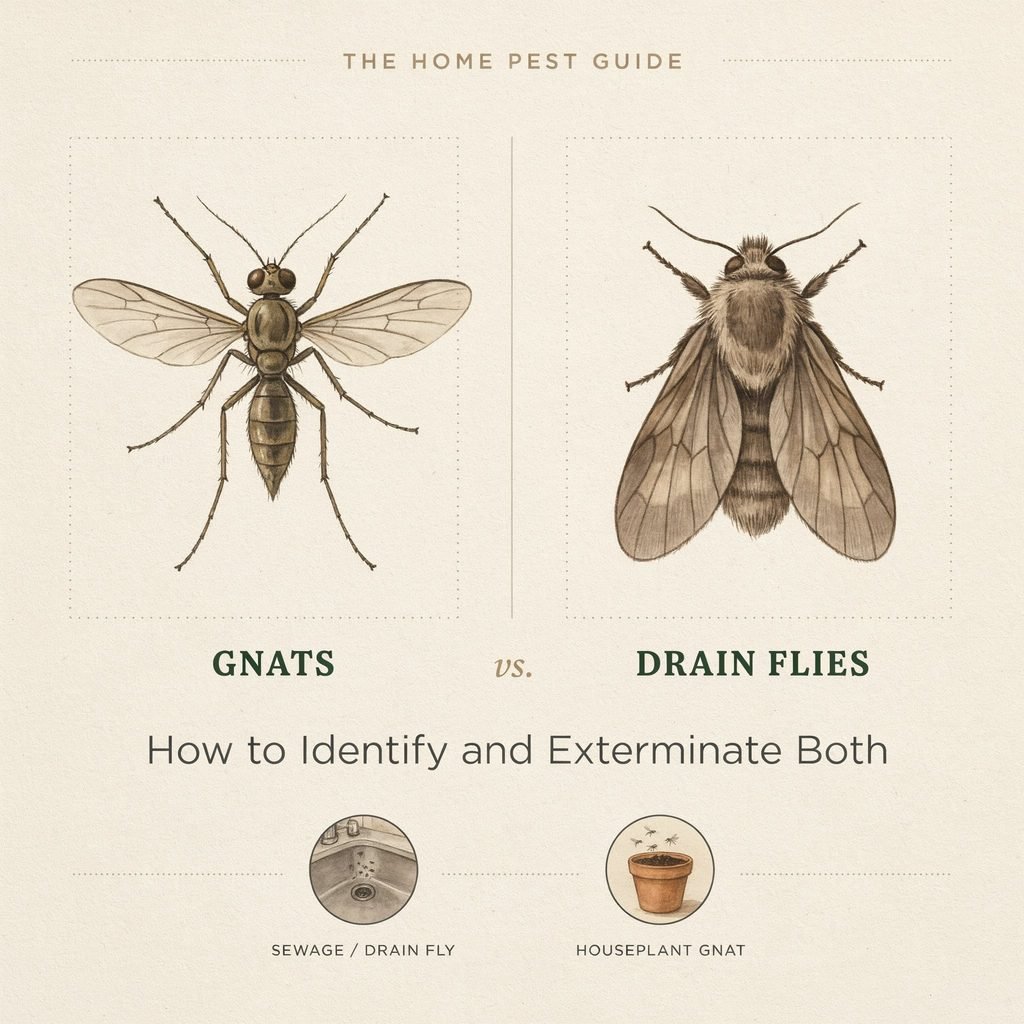
| Appearance | Slender, mosquito-like, long legs, dark body, clear wings | Fuzzy, moth-like, stocky body, hairy wings held roof-like over the back |
| Size | About 1/16–1/8 inch | About 1/16–1/8 inch, but looks bulkier due to fuzz |
| Color | Black or dark gray | Gray, tan, or light brown |
| Where you see them | Hovering near houseplants, windowsills, kitchen fruit bowls, lights | Sitting on tiles and walls near sinks, showers, floor drains, basement drains |
| Breeding site | Moist potting soil, overwatered plants, decaying fruit, garbage | Biofilm inside drains, sewer lines, standing water in pipes |
| Flight behavior | Weak, hovering flight; drawn to light | Short, hoppy bursts; often sit motionless on vertical surfaces |
Quick rule of thumb: If the bug looks like a tiny mosquito buzzing around your pothos plant, it’s a fungus gnat. If it looks like a fuzzy little moth parked on the bathroom wall next to the shower drain, it’s a drain fly.
How to Identify Gnats in Your Home
Fungus gnats are the number-one cause of “gnats in house” complaints across the US. Adults are about 1/8 inch long, dark-bodied, with long, dangling legs and a pair of clear, delicate wings. They resemble miniature mosquitoes but don’t bite.
Where to look:
- Hovering in loose clouds just above the soil surface of houseplants
- Crawling on windowsills or gathering around bright lights at night
- Buzzing near kitchen trash cans, overripe fruit bowls, or damp sponges
Signs of a real infestation:
- Tiny black flies rise from the soil the moment you water a plant.
- You spot translucent, worm-like gnat larvae in soil (about 1/4 inch long with a shiny black head) if you scrape back the top layer of potting mix.
- Yellow sticky traps placed near plants fill up within a day or two.
Common causes in US homes: Overwatered indoor plants, organic-rich potting soil that stays soggy, open compost bins, and decaying food left in trash cans.
A quick note on fruit flies: If your tiny flies cluster around bananas, wine glasses, or garbage disposals rather than plant soil, you’re likely dealing with fruit flies, not fungus gnats. Fruit flies are slightly rounder, tan to brown, and drawn to fermenting sugars. The vinegar-trap methods below work well for them, too.
How to Identify Drain Flies (Sewer Gnats / Moth Flies)
Drain flies look nothing like gnats up close. Their bodies and wings are covered in fine hairs, giving them a fuzzy, moth-like appearance. They’re typically gray or light brown, about 1/8 inch long, and hold their broad, hairy wings flat over their backs like a tiny tent.
Where you’ll find them:
- On bathroom and kitchen tiles within a foot or two of a drain
- Around shower stalls, bathtub overflows, and toilet bases
- Near floor drains in basements, garages, laundry rooms, and utility sinks
Behavior clues: Drain flies are weak fliers. They take short, hopping flights when disturbed, then land again on a nearby wall. They’re most active in the evening and overnight.
How to confirm they’re coming from a drain:
- The tape test: Before bed, dry the area around a suspect drain and press a strip of clear packing tape (sticky side down) over the opening. In the morning, check the tape. If you see small, fuzzy flies stuck to it, that drain is your breeding source.
- Look for biofilm: Remove the drain cover and shine a flashlight inside. A thick, dark, gelatinous slime coating the pipe walls is biofilm in drains—the exact material drain fly larvae feed on.
Drain flies don’t breed in the water itself. They lay eggs in that organic film, and the drain fly larvae hatch and feed there for one to three weeks before pupating.
Are Gnats and Drain Flies Harmful?
The short answer: no, neither pest poses a serious health threat to you, your kids, or your pets. You don’t need to panic.
That said, they’re not exactly welcome houseguests. Drain flies can pick up bacteria from sewer biofilm and transfer it to nearby surfaces, which is a mild hygiene concern in kitchens and bathrooms. Fungus gnat larvae, meanwhile, nibble on tender plant roots and can stunt or kill seedlings and young houseplants over time.
More than anything, a persistent swarm signals an underlying moisture or sanitation issue worth addressing. Eliminating them improves your home’s comfort and cleanliness.
How to Get Rid of Gnats (Step-by-Step)
Follow this plan to eliminate gnats in your house and keep them from returning.
1. Find and remove breeding sources
- Toss overripe fruit and vegetables. Wipe down counters and take out kitchen trash daily.
- Fix any leaky faucets or condensation issues that keep surfaces damp.
- Let the top two inches of houseplant soil dry out completely between waterings.
2. Treat houseplants for fungus gnats
- Place yellow sticky traps on or near the soil surface to catch adult gnats before they lay more eggs.
- Mix one part 3% hydrogen peroxide with four parts water and drench the soil. This kills gnat larvae in soil on contact and is safe for most plants.
- For severe infestations, apply Bacillus thuringiensis israelensis (Bti)—sold as “mosquito bits”—to the soil, or introduce beneficial nematodes.
3. Set up gnat traps
- Fill a small bowl with apple cider vinegar and a few drops of dish soap. Cover with plastic wrap and poke tiny holes. The vinegar trap for gnats lures adults in; the soap breaks surface tension so they drown.
- For fruit flies specifically, a splash of red wine or a piece of overripe banana in a jar with a funnel top works well.
4. Improve sanitation and moisture control
- Wipe sinks and counters dry each night. Run the bathroom exhaust fan during and after showers.
- Store produce in the refrigerator. Keep trash cans lidded and clean them weekly.
Safety note: Keep vinegar traps and hydrogen peroxide solutions out of reach of small children and curious pets.
How to Get Rid of Drain Flies (Step-by-Step)
Getting rid of drain flies requires attacking the biofilm where they breed. Here’s a proven protocol.
1. Confirm the source drain(s)
Run the tape test described above on every drain in the affected room—sinks, showers, tubs, and floor drains. Mark the ones that catch flies.
2. Mechanically clean the drain
- Remove the drain cover or stopper.
- Use a stiff-bristled pipe brush (a long, flexible drain brush works best) to scrub the inside walls of the pipe. You’re physically removing the slimy biofilm and any eggs or larvae.
- Rinse the brush and repeat until the pipe walls feel relatively clean.
3. Flush and treat the drain
- Pour a full kettle of boiling water slowly down the drain. Repeat this two to three times per week for at least three weeks. Boiling water for drain flies kills exposed larvae and loosens residue.
- Follow with a baking soda and vinegar treatment: pour ½ cup baking soda down the drain, then ½ cup white vinegar. Let it fizz for 15 minutes, then flush with very hot water.
- For ongoing maintenance, use an enzyme-based or microbial drain cleaner. These products contain live bacteria and enzymes that digest organic buildup over several hours. Pour the recommended amount down the drain at night when the sink won’t be used, and let it work until morning. Enzyme drain cleaner for drain flies is one of the most effective long-term tools because it continuously breaks down the biofilm larvae need.
4. Avoid ineffective or damaging methods
- Bleach pours over the biofilm without removing it and can corrode older pipes. It’s not a reliable solution.
- Harsh chemical drain openers can damage PVC joints and metal pipes over time, and they don’t address the organic film drain flies need.
5. Treat every potential drain
Don’t stop at the obvious one. Address bathroom sinks, shower and tub drains, the kitchen sink, laundry-room drains, basement floor drains, and utility sinks. Drain flies can breed in any drain with even a thin layer of organic sludge.
6. Repeat and monitor
Drain fly life cycles run roughly two to three weeks from egg to adult. Continue your cleaning and flushing routine for at least three to four weeks to break the cycle completely. Re-run the tape test weekly to confirm activity is dropping.
Preventing Gnats and Drain Flies from Coming Back
Once you’ve cleared the infestation, a few habits will stop drain flies from coming back and keep gnats out of your houseplants.
For gnats:
- Water houseplants only when the top two inches of soil feel dry. Use pots with drainage holes and well-draining potting mix.
- Top-dress plant soil with a thin layer of sand or fine gravel to discourage egg-laying.
- Keep kitchen counters clean, store fruit in the fridge, and seal trash bags tightly.
For drain flies:
- Once a week, flush each drain with very hot water. Once a month, run an enzyme drain cleaner overnight.
- Fix dripping faucets and eliminate standing water in sinks, tubs, and shower floors.
- For rarely used floor drains (guest bathrooms, basements), pour a gallon of water down them every couple of weeks so the trap seal doesn’t dry out and let flies up from the sewer line.
General tips:
- Run a dehumidifier in damp basements or crawl spaces.
- Seal gaps and cracks around pipe entries under sinks.
- Keep bathroom and kitchen exhaust fans in good working order to reduce ambient humidity.
When to Call a Professional Pest Control Service
DIY methods solve the vast majority of gnat and drain fly problems. But consider calling a licensed exterminator or plumber if:
- You’ve followed the steps above diligently for four or more weeks and still see significant activity.
- Multiple drains throughout the house are affected simultaneously.
- You suspect a cracked sewer line, a broken drain seal, or chronic moisture behind walls.
A professional can perform a camera inspection of your plumbing, apply commercial-grade enzymatic or mechanical treatments, and identify hidden structural issues that feed the infestation. For persistent problems, this is often the fastest and most cost-effective path to a bug-free home.
FAQ: Gnats vs. Drain Flies
Are drain flies the same as gnats?
No. Drain flies (moth flies/sewer gnats) are fuzzy, moth-like insects that breed in drain biofilm. Gnats—especially fungus gnats—are slender, mosquito-like flies that breed in moist soil or decaying organic matter. They need different treatments.
Why do I keep seeing gnats in my bathroom?
Bathrooms offer moisture and organic residue. If the bugs are fuzzy and sit near the drain, they’re likely drain flies. If they’re slender and hover near a small bathroom plant or window, they may be fungus gnats attracted to damp conditions.
Will boiling water kill drain fly eggs and larvae?
Boiling water kills exposed larvae and loosens biofilm, but it won’t fully remove the organic layer. Pair it with mechanical brushing and an enzyme cleaner for best results.
How long does it take to get rid of drain flies?
Expect two to four weeks of consistent drain cleaning and flushing to break the full life cycle. You should see a noticeable reduction within the first seven to ten days.
Do fungus gnats go away on their own?
Rarely. If the soil stays moist, adults keep laying eggs. You need to dry out the soil, treat the larvae, and trap the adults to break the cycle.
Are drain flies harmful to humans or pets?
They don’t bite or sting and aren’t known to spread disease in typical household settings. They are, however, a nuisance and a sign of drain buildup worth cleaning.
Conclusion
Gnats and drain flies may look like interchangeable “tiny flies” at first glance, but they breed in completely different places and respond to completely different treatments. Fungus gnats need dry soil, sticky traps, and a hydrogen peroxide drench. Drain flies need scrubbed pipes, hot-water flushes, and enzyme cleaners to destroy the biofilm they call home.
Identify your pest correctly, follow the step-by-step plan for that pest, and stay consistent for at least three to four weeks. Add a few simple prevention habits—proper watering, regular drain maintenance, good ventilation—and those tiny uninvited guests will stay gone. Your kitchen, bathroom, and houseplants will thank you.