There’s nothing quite as frustrating as walking into your kitchen at 2 AM for a glass of water, only to find a perfectly organized line of tiny black ants marching across your countertop. If you’ve ever squished one of these invaders and caught a whiff of something that smells suspiciously like rotten coconut or blue cheese, you’ve encountered odorous house ants — one of the most common and persistent indoor ants in the United States.
These tiny pests are the bane of homeowners from coast to coast, showing up uninvited in kitchens, bathrooms, basements, and anywhere else food or moisture can be found. Unlike some ant species that sting or cause structural damage, odorous house ants (Tapinoma sessile) are primarily a nuisance — but what they lack in danger, they make up for in sheer persistence and numbers. A single colony can contain tens of thousands of workers and multiple queens, making them notoriously difficult to eliminate once they’ve established themselves inside your home.
The good news? With the right strategy, patience, and a little know-how, you can successfully kick these smelly invaders out and keep them from coming back. Whether you’re dealing with a minor trail along the baseboard or a full-blown ant infestation that seems to have taken over your pantry, this comprehensive guide will walk you through everything you need to know about odorous house ant control — from identification to elimination to long-term pest prevention.
How to Identify Odorous House Ants
Before you can effectively eliminate ants, you need to make sure you’re dealing with the right species. Odorous house ants share your home with several other common house ants, and misidentification can lead to ineffective ant treatment strategies.
Physical Appearance
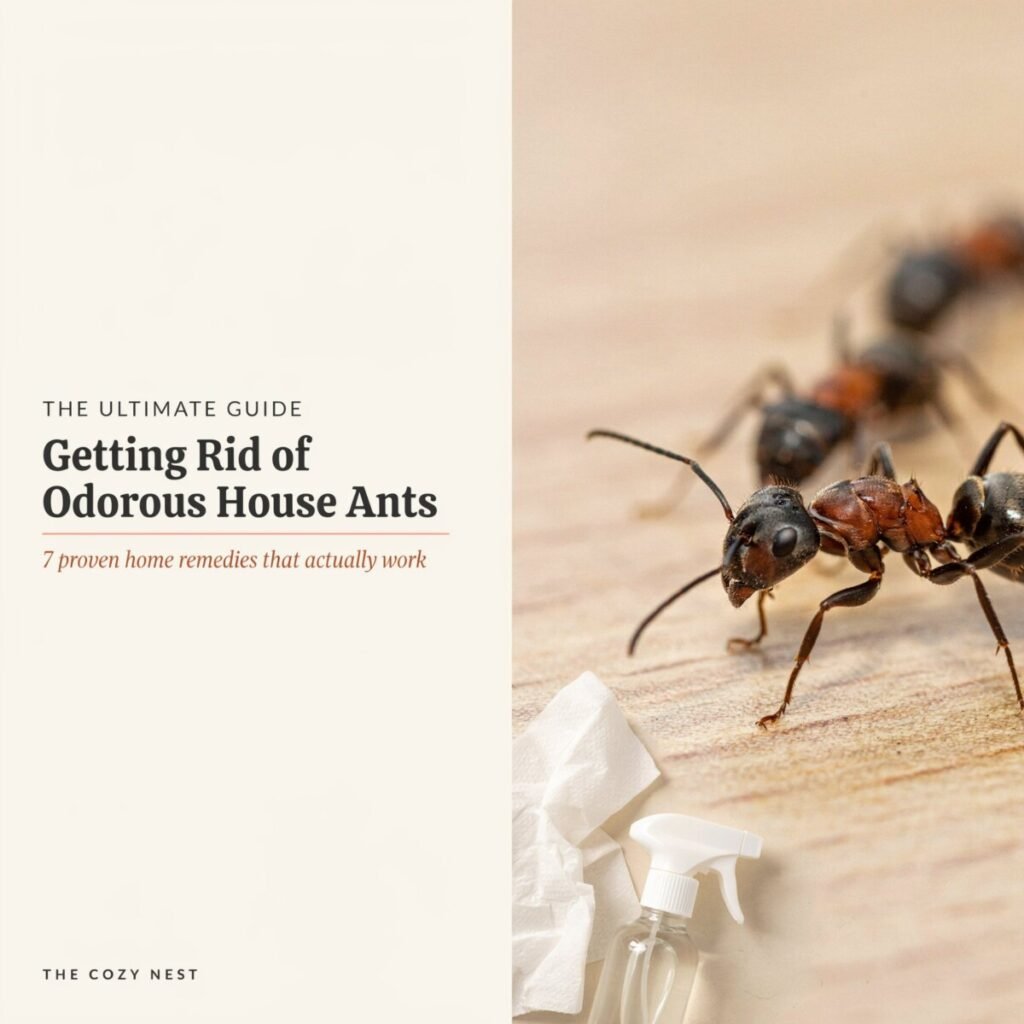
Odorous house ants are small — typically measuring between 1/16 and 1/8 of an inch long. They’re usually dark brown to black in color, with a somewhat unevenly shaped thorax (the middle body segment) when viewed from the side. Unlike some other ant species, they have a hidden, single-node (petiole) that’s difficult to see without magnification. Their antennae are 12-segmented and lack a distinct club at the end.
The Signature Smell
The most reliable way to identify odorous house ants is by their distinctive odor. When crushed or disturbed, these ants release a smell that’s often described as:
- Rotten coconut
- Blue cheese
- Rancid butter
- A sweet, musty odor
This smell comes from a chemical compound called methyl ketones, which the ants produce as a defense mechanism. If you’ve been wondering “are these sugar ants?” — the answer might be yes. Many people colloquially call odorous house ants sugar ants because of their strong attraction to sweet foods, though “sugar ant” is a catch-all term that can refer to several species.
Behavior and Nesting Habits
Odorous house ants are social insects that live in large, cooperative colonies. You’ll typically spot them traveling in well-defined ant trails along baseboards, countertops, pipes, and wiring. They’re most active during warm months but can remain active indoors year-round if conditions are favorable.
These ants are opportunistic nesters, meaning they’ll set up shop wherever they find suitable conditions. Common ant nest locations include:
- Indoors: Wall voids, under floors, near water pipes, inside cabinets, around heat sources, and in areas with moisture damage
- Outdoors: Under rocks, in mulch, beneath siding, inside rotting logs, and in shallow soil near foundations
Telling Them Apart from Other House Ants
It’s easy to confuse odorous house ants with other common species. Here’s how to distinguish them:
| Feature | Odorous House Ants | Carpenter Ants | Pavement Ants |
|---|---|---|---|
| Size | 1/16 – 1/8 inch | 1/4 – 1/2 inch | 1/8 – 3/16 inch |
| Color | Dark brown to black | Black, red, or brown | Dark brown to black |
| Smell when crushed | Rotten coconut | No distinct smell | No distinct smell |
| Nest location | Shallow soil, wall voids | Wood structures | Under pavement, foundations |
| Stinger | No | No | Yes (weak) |
Carpenter ants are significantly larger and can cause wood damage. Pavement ants have distinctive grooves on their heads and thoraxes and tend to nest in or under concrete. If you’re still unsure, collecting a specimen and consulting with your local pest control extension office or a professional ant exterminator can help confirm identification.
Why Odorous House Ants Keep Coming Back
Understanding why these ants invade your home is half the battle in achieving long-term odorous house ant control. If you keep getting ants despite your best efforts, one or more of these factors is likely at play.
They’re After Three Things: Food, Water, and Shelter
Odorous house ants are incredibly efficient foragers. Scout ants are sent out daily to search for resources, and once they find something worthwhile, they leave a pheromone trail that hundreds — sometimes thousands — of their nest mates follow.
Food sources that attract odorous house ants include:
- Spilled sugar, honey, syrup, or juice
- Unsealed pantry items (cereal, cookies, crackers)
- Pet food left out overnight
- Grease residue on stovetops and countertops
- Overripe fruit on countertops
- Unrinsed recycling bins
Moisture is equally important. These ants thrive in damp environments and are frequently found in:
- Bathrooms with leaky faucets or poor ventilation
- Kitchens with dripping pipes
- Basements and crawl spaces with high humidity
- Areas around dishwashers and washing machines
Shelter in the form of wall voids, insulation, and clutter provides ideal nesting sites that are nearly impossible for homeowners to reach with standard DIY methods.
The Super-Colony Problem
Here’s what makes odorous house ants particularly challenging: many populations form what entomologists call “super-colonies.” Unlike colonies with a single queen, odorous house ant super-colonies can contain multiple queens — sometimes hundreds — spread across several interconnected nesting sites. This means that even if you successfully eliminate one nest, satellite colonies can quickly repopulate the area.
These ants don’t typically swarm the way termites or some ant species do. Instead, they reproduce through a process called “budding,” where a group of workers and one or more queens simply relocate to establish a new nest nearby. This is why spraying visible ants with insecticide can sometimes make the problem worse — it triggers budding, scattering the colony into multiple new locations.
Seasonal Patterns
In many parts of the US, odorous house ant activity peaks in spring and summer when outdoor colonies are most active and foraging is at its height. However, these ants frequently move indoors during:
- Late fall and winter (seeking warmth)
- Heavy rains or flooding (seeking dry ground)
- Periods of extreme heat or drought (seeking moisture)
Understanding these patterns helps explain why you might see sudden indoor ants appear after a storm or why odorous house ants in kitchen spaces seem to multiply in early spring.
How to Get Rid of Odorous House Ants: Proven Strategies
Now that you know what you’re dealing with, let’s dive into the most effective methods for getting rid of odorous house ants. The key to success is using a multi-pronged approach that combines baiting, sanitation, exclusion, and targeted treatment.
1. Use the Right Ant Bait — This Is Your Best Weapon
When it comes to odorous house ant control, ant bait is overwhelmingly the most effective tool available to homeowners. Unlike sprays that kill only the ants you see, baits work slowly — allowing worker ants to carry the toxic food back to the colony where it’s shared with the queens and larvae. This is essential for eliminating the entire ant colony, not just the foragers.
Choosing the best bait for odorous house ants:
These ants have a sweet tooth, so sugar-based or gel baits tend to be most effective. Look for products containing these active ingredients:
- Boric acid / Borax — A slow-acting stomach poison that’s highly effective when combined with sugar water
- Fipronil — Used in many commercial ant bait stations and professional-grade products
- Imidacloprid — A neonicotinoid insecticide effective against many ant species
- Indoxacarb — A newer active ingredient that requires metabolic activation, making it highly targeted
- Hydramethylnon — A slow-acting poison that gives foragers plenty of time to return to the nest
Popular and effective bait options include:
- Terro Liquid Ant Bait (borax-based, readily available)
- Advion Ant Gel (indoxacarb, professional-grade)
- Maxforce Quantum Ant Bait (imidacloprid, long-lasting)
- Optigard Ant Gel (thiamethoxam, palatable to many species)
How to use ant bait effectively:
- Place bait stations or gel drops directly on ant trails — don’t be tempted to clean the trail first; the ants need to find the bait
- Use multiple bait placements — place small amounts in several locations where you’ve seen activity
- Be patient — it can take 1–3 weeks to see a significant reduction as the poison works through the colony
- Don’t kill visible ants near the bait — you need them to carry the bait back to the nest
- Rotate bait types if ants seem to stop feeding on one type (ant preferences can change seasonally)
2. Clean and Disrupt Ant Trails
While you’re waiting for baits to work, it’s important to eliminate the pheromone trails that guide new foragers into your home.
- Wipe down ant trails with a solution of equal parts white vinegar and water, which disrupts pheromone signals
- Clean countertops, floors, and cabinets with a general-purpose cleaner to remove food residues
- Empty and clean trash cans regularly
- Store food in airtight containers — including sugar, cereal, pet food, and snacks
- Wipe up spills immediately, especially sweet liquids
- Run the dishwasher regularly and don’t let dirty dishes pile up overnight
3. Seal Entry Points
The best way to achieve lasting ant prevention is to physically prevent ants from getting inside. Conduct a thorough inspection of your home’s exterior and seal entry points including:
- Cracks in the foundation — use concrete caulk or expanding foam
- Gaps around windows and doors — apply weatherstripping and caulk
- Openings around utility pipes and wiring — use steel wool and caulk or foam sealant
- Vents and weep holes — install fine mesh screens
- Gaps in siding or fascia boards — repair or replace damaged materials
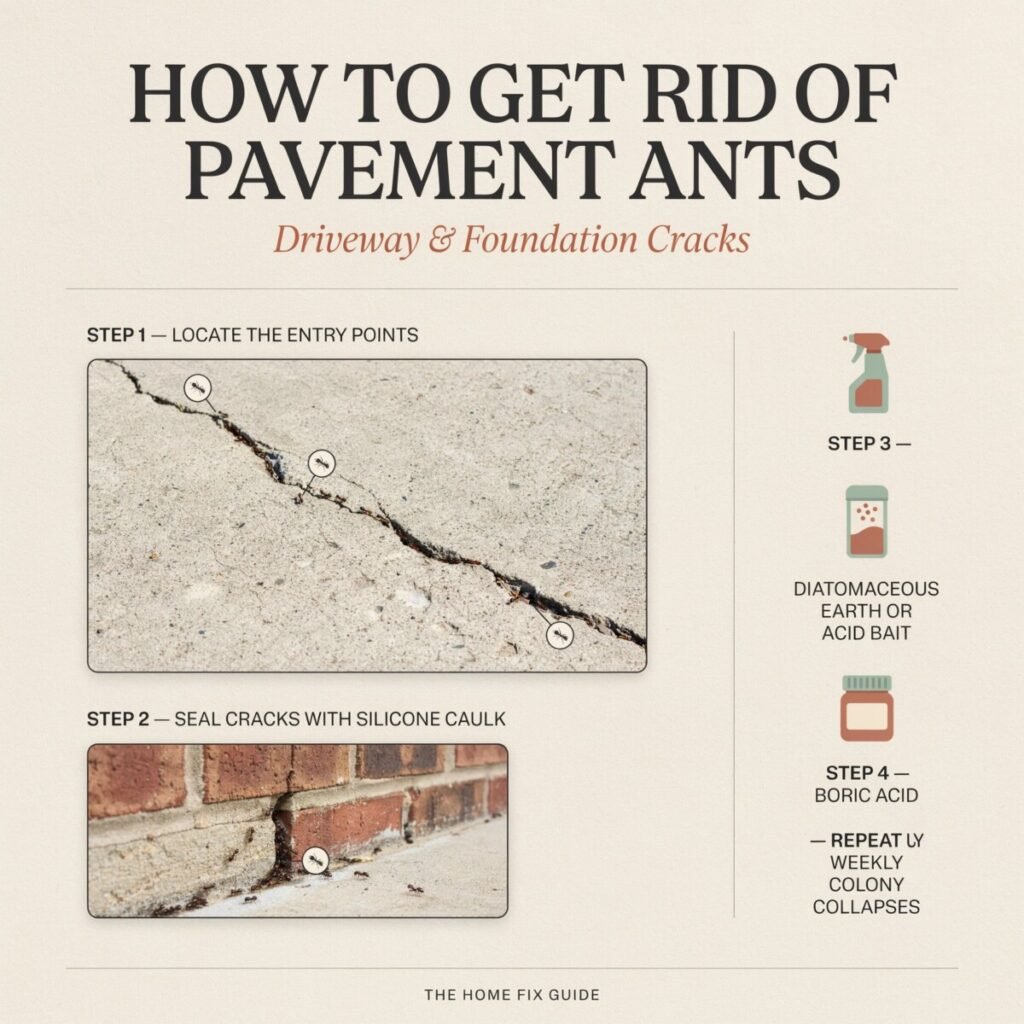
- Cracks in driveways, sidewalks, and patios — seal with appropriate concrete sealant
Focus especially on areas where you’ve seen ant trails entering the home. Ants can squeeze through gaps as small as 1/16 of an inch, so be thorough.
4. Indoor Treatment Options
In addition to baiting, consider these complementary indoor treatments:
- Diatomaceous earth (food grade) — Apply a thin layer in wall voids, under appliances, and along baseboards. This natural powder damages ants’ exoskeletons, causing dehydration.
- Dust insecticides — Products containing deltamethrin or cypermethrin can be applied in wall voids and behind switch plates for long-lasting residual control.
- Boric acid powder — Mix with sugar and place in areas inaccessible to children and pets. It’s a highly effective natural ant killer when used correctly.
5. Address Moisture Issues
Since odorous house ants are strongly attracted to moisture, fixing water problems is a critical part of ant prevention tips:
- Repair leaky faucets, pipes, and fixtures
- Ensure proper drainage around your home’s foundation
- Use dehumidifiers in damp basements and crawl spaces
- Fix roof leaks and replace water-damaged wood
- Improve ventilation in bathrooms and laundry areas
- Empty drip trays under refrigerators and HVAC units regularly
Natural and DIY Ant Control Methods
If you prefer to avoid chemical pesticides — especially in homes with children or pets — there are several effective DIY ant removal and natural ant killer methods that can help manage odorous house ant populations.
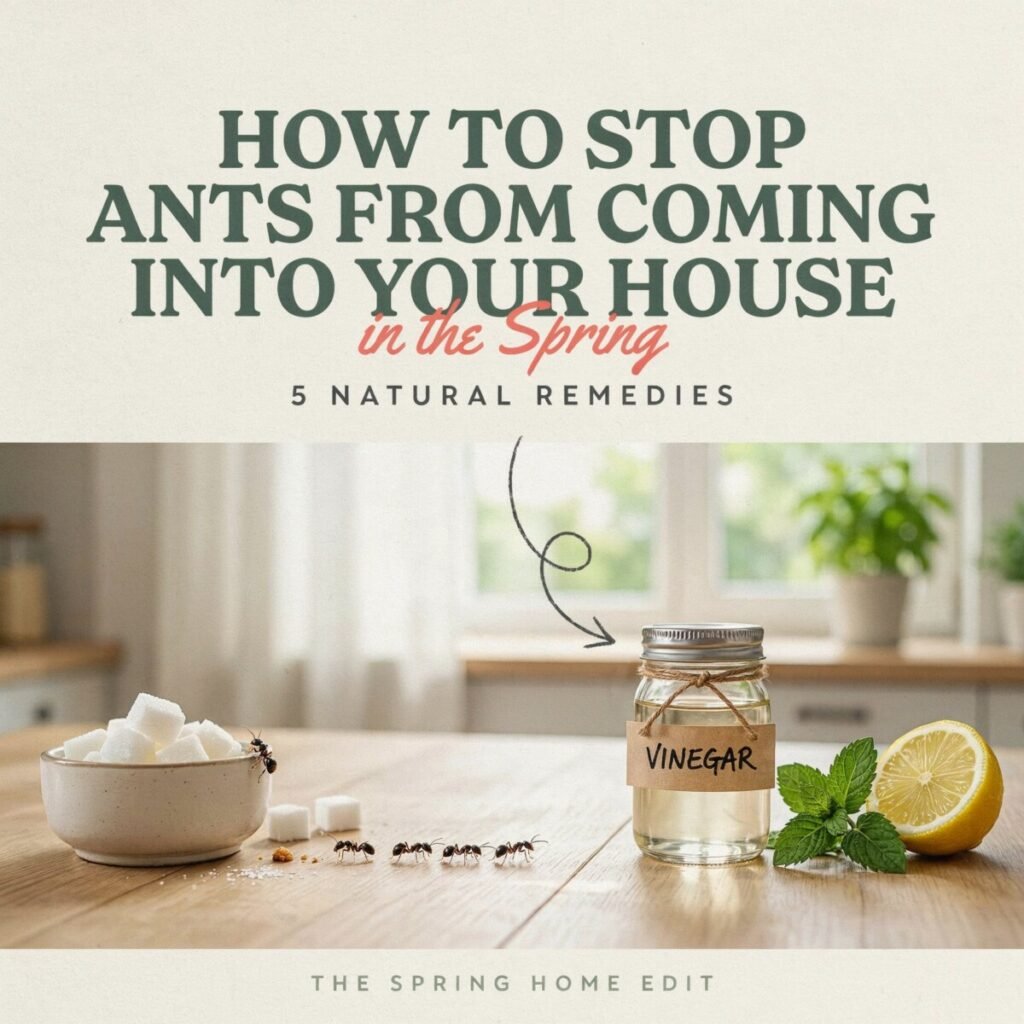
Vinegar Solution
A simple mixture of equal parts white vinegar and water is one of the most effective natural tools for ant control. Vinegar works by:
- Disrupting ant pheromone trails, making it harder for ants to navigate
- Killing ants on contact (the acetic acid is toxic to them)
- Repelling ants from treated areas
How to use:
- Spray directly on ant trails and entry points
- Wipe down countertops, floors, and cabinets
- Use as a general cleaning solution for kitchen and bathroom surfaces
- Reapply every few days or after cleaning
For extra repellent power, add 10–15 drops of essential oils like peppermint, tea tree, or lemon to your vinegar solution.
Soap and Water Spray
A basic dish soap spray is surprisingly effective as a contact killer for visible ants:
- Mix 1–2 tablespoons of liquid dish soap with 16 ounces of water in a spray bottle
- Spray directly on ants and along trails
- The soap breaks down the ants’ waxy exoskeleton, causing suffocation
This method kills only the ants you spray and doesn’t affect the colony, so it’s best used alongside baiting strategies.
Essential Oil Repellents
Several essential oils have natural insect-repelling properties:
- Peppermint oil — Strong scent disrupts ant navigation
- Tea tree oil — Natural insecticide properties
- Lemon eucalyptus oil — Contains compounds that repel insects
- Cinnamon oil — Acts as both a repellent and contact killer
- Clove oil — Contains eugenol, which is toxic to many insects
Mix 10–20 drops of essential oil with water in a spray bottle and apply around entry points, windowsills, and baseboards. Reapply weekly or after rain/cleaning.
Diatomaceous Earth
Food-grade diatomaceous earth (DE) is a natural, non-toxic powder made from fossilized aquatic organisms. It works mechanically rather than chemically:
- The microscopic sharp edges of DE particles cut through ants’ exoskeletons
- The powder absorbs lipids from the waxy outer layer, causing dehydration and death
- It remains effective as long as it stays dry
Application tips:
- Apply a thin, barely visible layer in areas where ants travel
- Use behind appliances, under cabinets, and along baseboards
- Avoid inhaling the powder — wear a mask during application
- Reapply after cleaning or if it gets wet
- Keep away from areas accessible to small children
Homemade Borax Bait
For a DIY version of commercial ant baits, try this proven recipe:
Ingredients:
- 1 cup warm water
- ½ cup sugar
- 1½ tablespoons borax
- Cotton balls
Instructions:
- Dissolve the sugar and borax in warm water
- Soak cotton balls in the solution
- Place cotton balls in areas where ants are active (on bottle caps or small dishes)
- Keep away from children and pets
The sugar attracts the ants, and the borax acts as a slow-acting stomach poison. Worker ants carry the solution back to the colony, eventually killing the queen. Note: While borax is relatively low in toxicity to humans and pets, it should still be used with caution and kept out of reach.
Cinnamon and Coffee Grounds
Both ground cinnamon and used coffee grounds act as natural barriers that ants are reluctant to cross:
- Sprinkle a line of cinnamon or coffee grounds at entry points
- Place around the perimeter of your home’s foundation
- Use in garden beds to protect outdoor plants
While these won’t eliminate a colony, they can help redirect ant traffic and discourage foraging in specific areas.
Outdoor Prevention Strategies
Effective outdoor ant control is just as important as indoor treatment. By making your yard less attractive to odorous house ants, you reduce the pressure on your home’s defenses and lower the likelihood of future invasions.
Landscaping and Vegetation Management
Overgrown vegetation provides ants with protected pathways into your home and creates ideal nesting conditions.
- Trim trees and shrubs so branches don’t touch your house — ants use these as bridges to access your home
- Keep vegetation at least 12–18 inches away from your foundation
- Remove dead or rotting wood from your yard, including old stumps, firewood piles, and fallen branches
- Avoid piling mulch directly against your foundation — maintain a 6–12 inch gap between mulch and the house
- Use inorganic mulch (gravel, stone) near the foundation instead of organic mulch, which retains moisture and provides nesting sites
- Mow your lawn regularly and keep it well-maintained
Foundation and Perimeter Care
Your home’s foundation is ground zero for ant entry. Regular maintenance here pays dividends:
- Inspect your foundation seasonally for cracks and gaps, and seal them promptly
- Ensure proper grading — soil should slope away from your foundation to prevent moisture buildup
- Clean gutters and downspouts regularly to prevent water from pooling near your home
- Extend downspout outlets at least 5–10 feet from your foundation
- Remove debris — clear away leaves, dead grass, and organic matter from around your foundation
- Treat the perimeter with a granular or liquid ant bait as a preventive measure in spring and fall
Reducing Outdoor Food and Water Sources
- Keep trash cans tightly sealed and place them as far from your home as practical
- Clean outdoor eating areas after meals and barbecues
- Rinse recycling containers before storing them
- Pick up fallen fruit from fruit trees
- Move bird feeders away from the house and clean up spilled seed regularly
- Store pet food indoors and don’t leave it outside
- Fix outdoor faucets and irrigation leaks that create moisture
Outdoor Bait Stations
For properties with persistent outdoor ant activity, consider installing commercial ant bait stations around your home’s perimeter. These weather-resistant stations:
- Protect the bait from rain and sun
- Keep bait away from children and pets
- Provide a continuous food source that foraging ants carry back to outdoor colonies
- Can significantly reduce ant pressure around your home
Place bait stations every 10–15 feet along the foundation and near known nesting areas. Replace or refill stations as directed by the product label.
Firewood and Storage
- Store firewood at least 20 feet from your home and elevate it off the ground
- Inspect firewood for ant activity before bringing it inside
- Keep storage areas (sheds, garages) clean and organized
- Avoid storing cardboard boxes directly on concrete floors, as they can harbor moisture and attract ants
Common Mistakes That Make the Problem Worse
When dealing with an ant infestation, well-intentioned homeowners often make mistakes that inadvertently worsen the problem or delay effective treatment. Avoid these common pitfalls:
Mistake 1: Relying Solely on Ant Spray
It’s tempting to grab a can of ant spray and go to town on every ant you see. While contact sprays kill visible ants immediately, they:
- Don’t address the colony or the queens
- Can cause colony budding, splitting the population into multiple new nests
- Create a false sense of security — the ants you killed are quickly replaced by new foragers
Sprays have their place (for immediate knockdown of visible ants in sensitive areas), but they should never be your primary strategy for getting rid of odorous house ants.
Mistake 2: Killing Ants Near Bait Stations
If you’ve placed ant bait and see ants actively feeding on it, resist the urge to squish them. Those ants are your delivery service — they’re carrying the toxic bait back to the colony where it will eventually kill the queens and larvae. Killing them defeats the entire purpose of baiting.
Mistake 3: Cleaning Bait Areas Too Aggressively
While sanitation is important, don’t use strong cleaners, bleach, or vinegar directly on or near bait placements. These products can contaminate the bait or mask its scent, making it unattractive to ants.
Mistake 4: Using the Wrong Type of Bait
Odorous house ants’ food preferences can change throughout the year:
- Spring/Summer: They tend to prefer sweet, carbohydrate-based baits
- Fall/Winter: They often shift toward protein or grease-based foods
If ants aren’t taking a sweet bait, try switching to a protein-based bait (like peanut butter mixed with borax) or a combination bait that offers multiple food types.
Mistake 5: Ignoring the Outdoor Source
Many homeowners focus exclusively on treating indoor ants while ignoring the outdoor colonies that are constantly sending foragers inside. Without addressing the source, you’ll be playing an endless game of whack-a-mole.
Mistake 6: Giving Up Too Soon
Ant bait treatments take time — typically 1–3 weeks to show significant results. The slow-acting nature of the poison is actually a feature, not a bug. If you don’t see immediate results, don’t switch tactics prematurely. Give the bait time to work.
Mistake 7: Only Treating Once
Even after you’ve successfully eliminated a colony, reinfestation is common — especially in areas where odorous house ants are prevalent. Ongoing pest prevention including regular baiting, monitoring, and exclusion maintenance is essential for long-term control.
Mistake 8: Using Repellents Near Baits
Don’t use peppermint oil, vinegar, or other repellent products in the same area where you’ve placed ant bait. The repellent will discourage ants from approaching the bait, rendering it useless.
Mistake 9: Sealing Entry Points Before Eliminating the Colony
If you seal ants inside your walls by closing off entry points before you’ve eliminated the colony, you may force them to bud and create new nests deeper within your home. Always bait and eliminate the colony first, then seal entry points.
When to Call a Professional Pest Control Service
While many odorous house ant infestations can be managed with DIY methods, there are situations where calling a professional ant exterminator is the wisest choice.
Signs You Need Professional Help
Consider hiring a pest control professional if you’re experiencing:
1. Repeated or Persistent Infestations
If you’ve tried baiting, cleaning, and sealing but the ants keep coming back, a professional has access to commercial-grade products and specialized equipment that aren’t available to consumers.
2. Multiple Active Trails
Seeing ants in multiple rooms or along multiple trails often indicates a large, well-established colony — or multiple colonies — that require more aggressive treatment.
3. Ants in Walls or Hard-to-Reach Areas
If you suspect an ant nest inside wall voids, under slabs, or in other inaccessible areas, professionals can:
- Use specialized injection equipment to treat wall voids
- Apply non-repellent insecticides that ants can’t detect (so they continue to forage normally and spread the product throughout the colony)
- Use thermal imaging or moisture meters to locate hidden nests
4. Structural Moisture Problems
If your ant problem is linked to water damage, rotting wood, or chronic moisture issues, a professional can help identify and address these underlying problems.
5. Colony Budding After Treatment
If your DIY efforts have accidentally triggered colony budding (you suddenly see ants in new areas after treatment), professional intervention can help get the situation under control.
6. Sensitive Environments
If you have small children, pets, or family members with chemical sensitivities, a professional can design a targeted treatment plan that minimizes pesticide exposure while still effectively eliminating the ants.
What to Expect from a Professional Treatment
A reputable home pest control company will typically:
- Conduct a thorough inspection to identify the ant species, locate nests, and assess the extent of the infestation
- Develop a customized treatment plan that may include:
- Non-repellent liquid insecticides (like Termidor or Altriset) applied around the foundation and in cracks
- Professional-grade gel baits placed in targeted locations
- Dust treatments applied in wall voids and other inaccessible areas
- Granular baits applied to the outdoor perimeter
- Provide recommendations for exclusion, sanitation, and habitat modification
- Offer follow-up visits to monitor effectiveness and re-treat if necessary
- Provide a warranty or guarantee on their work
Choosing the Right Pest Control Company
When selecting a professional, look for:
- Proper licensing and certification in your state
- Positive reviews and references from local customers
- Experience specifically with ant control (not just general pest services)
- Clear communication about treatment methods, products used, and expected timelines
- Eco-friendly options if you’re concerned about pesticide use
- Fair pricing with no high-pressure sales tactics
Conclusion: The Long-Term Strategy for an Ant-Free Home
Getting rid of odorous house ants isn’t a one-and-done project — it’s an ongoing commitment to making your home an unwelcoming environment for these persistent pests. The most successful homeowners use a combination of strategies that work together:
Bait — Use high-quality ant bait stations and gel baits to eliminate colonies at their source, including the hidden queens.
Clean — Maintain impeccable sanitation by removing food sources, wiping up spills, storing food in airtight containers, and managing moisture by removing moisture from problem areas.
Seal — Conduct regular inspections and seal entry points to physically prevent ants from entering your home.
Monitor — Stay vigilant, checking for new ant activity and addressing small problems before they become large infestations.
Prevent — Maintain your yard, manage landscaping, and use preventive outdoor ant control measures to reduce the ant population around your home.
Remember, the presence of odorous house ants in your home isn’t a reflection of your cleanliness or housekeeping — these ants are incredibly adaptable and resourceful, and they’ll invade even the most pristine homes if they find an opportunity. What matters is how you respond.
With patience, persistence, and the strategies outlined in this guide, you can successfully take back your home and enjoy an ant-free environment. Start with the basics — place some bait, clean up food sources, and seal obvious entry points — then build from there based on what you observe.
If DIY methods don’t provide lasting relief, don’t hesitate to call in the professionals. A qualified pest control expert can bring advanced tools and techniques to bear on stubborn infestations, saving you time, frustration, and potentially money in the long run.
Odorous house ants may be common, but they don’t have to be permanent residents in your home. Armed with knowledge and the right approach, you’ve got this.
Have you successfully eliminated odorous house ants from your home? Share your tips and experiences in the comments below!