There’s nothing quite like stepping onto your back patio on a warm Saturday morning—coffee in hand, sunshine on your shoulders—only to spot a papery gray disc tucked under the eave or a cluster of mud tubes clinging to the garage wall. If you live almost anywhere in the United States, that scene probably feels familiar. From late spring through early fall, mud daubers and paper wasps actively search for sheltered, dry spots to build nests, and homes offer an embarrassment of riches: protected eaves, warm soffits, covered porches, and the undersides of deck railings.
The good news? You don’t have to reach for harsh chemicals or call an exterminator the moment you see one. Both mud daubers and paper wasps are valuable predators that help control garden pests. The goal here is simple: encourage them to nest away from your doors, play areas, and outdoor eating spaces. Below, you’ll find a complete, humane guide to natural wasp deterrence and prevention—written for everyday homeowners who want safe, practical results.
Mud Daubers vs. Paper Wasps: Know Your Neighbor
Before you can deter these insects, it helps to know exactly which one you’re dealing with. Here’s a quick mud dauber vs paper wasp comparison.
Mud Daubers
- Appearance: Long, slender bodies with a very thin “thread” waist. Most species are black or dark metallic blue, sometimes with yellow markings. They look almost spindly compared to other wasps.
- Nesting habits: Females build small tubular nests out of mud, usually in sheltered spots like under eaves, inside sheds, on porch ceilings, or along garage walls.
- Behavior: Solitary hunters. They rarely sting unless physically grabbed. They spend most of their time collecting spiders to stock their mud cells.
Paper Wasps
- Appearance: Medium-sized, with longer legs and a more visible yellow-and-brown banded pattern. Their waists are pinched but not as dramatically thin as a mud dauber’s.
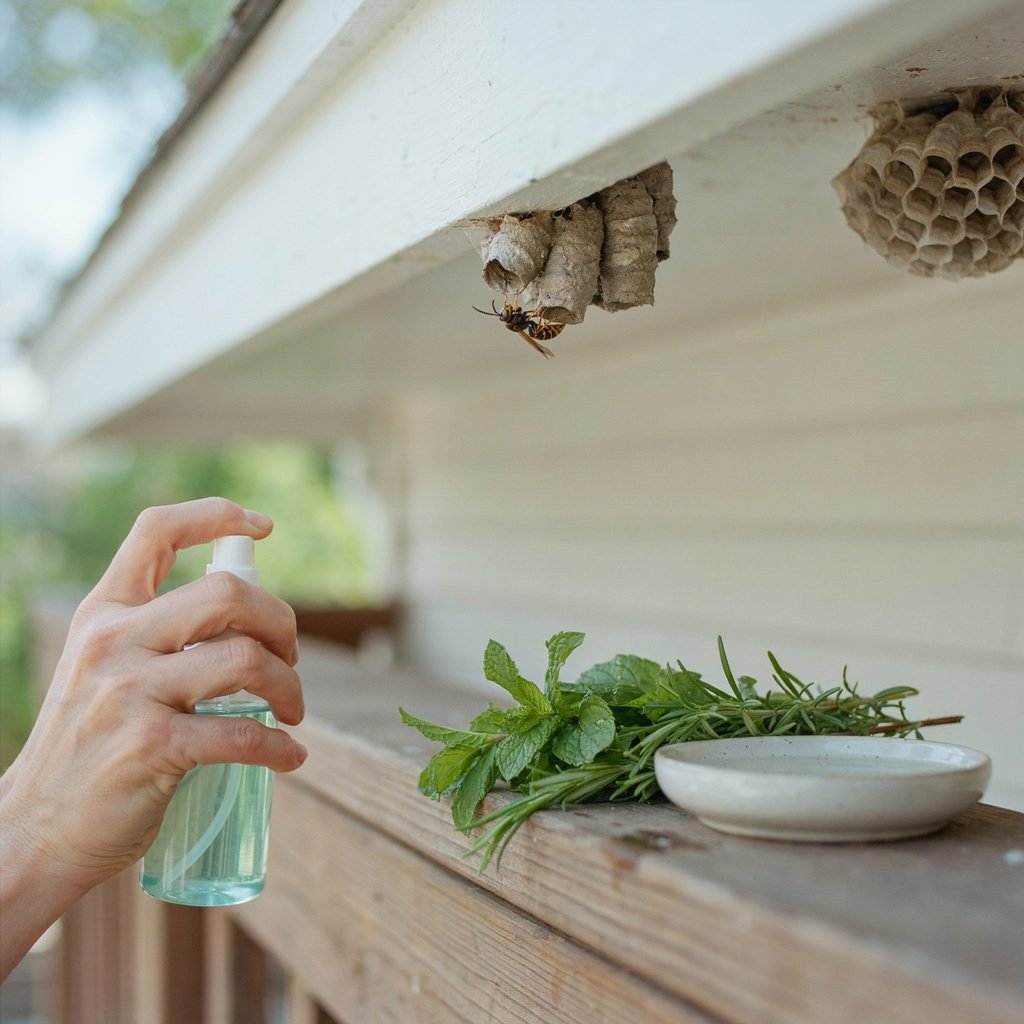
- Nesting habits: Build open, umbrella-shaped combs from chewed wood pulp. Nests hang from eaves, porch railings, shrubs, window frames, and play structures.
- Behavior: Semi-social. A small colony shares one comb. They are more defensive than mud daubers but still prefer to flee rather than attack.
How to Tell the Nests Apart
Identifying the nest is often faster than identifying the insect.
- Mud dauber nests look like clusters of small, rough, grayish-brown mud tubes or pots, usually no bigger than a thumb. They feel hard and crumbly once dry.
- Paper wasp nests resemble flat, open honeycombs made of papery gray or tan material. They hang from a single stalk and have exposed cells you can see from below.
If you spot a hard mud tube tucked in a corner of your soffit, you’re looking at a mud dauber. If you see a papery disc dangling under the porch light, that’s a paper wasp.
Are Mud Daubers and Paper Wasps Dangerous?
Homeowners often ask: Are mud daubers dangerous? The short answer is no—not really. Mud daubers are among the least aggressive stinging insects. They will typically only sting if crushed against bare skin.
Are paper wasps aggressive? Also no, but they are more defensive. If a nest is bumped, shaken, or sprayed with water, workers may sting to protect the colony. Paper wasp stings are painful and can cause localized swelling.
When to avoid disturbing a nest:
- If the nest is within arm’s reach of a doorway children use daily
- If anyone in the household has a known bee or wasp sting allergy
- If the nest is large (bigger than a baseball) or located inside a wall cavity
- If you’ve been stung repeatedly in the same area
In those cases, skip DIY handling entirely and consult a professional (more on that below).
Why They Choose Certain Spots Around Your Home
Wasps around eaves and soffits are no accident. These insects select nest sites based on a few key criteria:
- Shelter from rain and wind – Overhangs, covered patios, and garage interiors provide a dry microclimate.
- Proximity to prey or food – Mud daubers hunt spiders in gardens; paper wasps forage for nectar, fruit, and protein scraps near outdoor eating areas.
- Warm surfaces – South-facing walls and metal structures heat up in the sun, speeding larval development.
- Low traffic – They prefer corners, high eaves, and rarely opened shed doors where vibrations won’t disturb them.
Understanding these preferences is the foundation of wasp nest prevention.
Natural Ways to Deter Mud Daubers
If your question is how to get rid of mud daubers naturally, start by making your property less convenient for them.
- Reduce mud sources. Mud daubers need wet soil or puddles to harvest building material. Fix leaky spigots, improve drainage, and avoid overwatering garden beds directly beside the house.
- Seal cracks and gaps. Inspect soffits, fascia boards, and the junctions where walls meet roofs. Caulk openings wider than ⅛ inch.
- Clean old nests early. Scrape dried, abandoned mud tubes off walls before spring. A putty knife and a stiff brush work well. This removes the visual cue that tells new females the spot is “approved.” (This is essentially mud dauber nest removal at its simplest.)
- Limit insect prey. Fewer spiders around the porch means less reason for mud daubers to hunt there. Keep cobwebs swept from corners and eaves.
- Increase outdoor airflow. Mud daubers favor still air. A small oscillating fan on a covered patio discourages them from settling.
Natural Ways to Deter Paper Wasps
Paper wasp prevention focuses on removing attractants and eliminating cozy anchor points.
- Remove food sources. Keep fallen fruit picked up, pet food bowls indoors, and compost bins lidded.
- Keep trash sealed. Use tight-fitting lids on outdoor garbage cans and rinse recyclables before tossing them in bins.
- Clean grills and outdoor eating areas. Grease residue and spilled sugary drinks attract foraging workers. Wipe down tables and grill grates after every use to keep wasps away from outdoor eating areas.
- Use natural scent deterrents carefully. More on this in the next section.
- Reduce sheltered nesting spots. Trim back dense shrubs touching the house, clear dead branches from play structures, and consider installing fine mesh screening over open vents or gaps under deck railings.
Natural Repellents and Scents for Outdoor Spaces
Many homeowners turn to home remedies for wasps, especially scented deterrents. Below are the most commonly cited options for a natural wasp repellent:
- Peppermint oil – A peppermint oil wasp deterrent is among the most popular choices; the strong menthol scent is unpleasant to wasps.
- Clove oil – Often blended with peppermint for a stronger effect.
- Lemongrass and citronella – Commonly found in candles and sprays for patios.
- Eucalyptus oil – Adds a sharp, woody aroma wasps tend to avoid.
- White vinegar – A vinegar wasp repellent can be sprayed on non-nesting surfaces; the acetic smell lingers briefly and discourages scouting.
Important caveat: Results vary by species, weather, and concentration. These scents work best as part of a broader prevention strategy, not as a standalone fix. Reapply after rain and every few days for consistent coverage.
DIY Natural Wasp-Deterrent Spray
Here’s a simple recipe you can mix in five minutes. Use it around doorframes, patio railings, and eave edges—not on active nests.
Ingredients:
- 2 cups water
- 2 tablespoons white vinegar
- 10–15 drops peppermint essential oil
- 5 drops clove or lemongrass essential oil
- 1 teaspoon mild dish soap (helps the mixture cling)
Instructions:
- Combine all ingredients in a clean spray bottle.
- Shake gently to mix.
- Mist lightly around potential nesting sites: eave corners, porch posts, garage door frames, and shed window sills.
- Reapply every 3–4 days or after heavy rain.
Safety cautions:
- Never spray an active nest directly; you risk provoking stings.
- Keep essential oils away from pets—peppermint and clove oils can be toxic to cats and dogs if ingested or applied to skin.
- Avoid spraying on edible plants or directly on children’s toys.
- Test on a small, hidden surface first to ensure the mixture doesn’t stain siding or paint.
- Store the bottle out of reach of children.
This is one of the easiest safe wasp prevention tips you can add to a weekend routine.
Landscaping and Yard-Maintenance Habits
Smart outdoor wasp control starts with the landscape itself.
- Mow regularly and edge beds. Tall, unmowed grass harbors ground spiders that attract mud daubers.
- Prune trees and shrubs so branches don’t touch the roofline or hang over patios.
- Remove dead wood and stumps where paper wasps harvest cellulose.
- Avoid planting highly fragrant, nectar-rich flowers (lavender, marigolds, fruit trees) directly beside doorways or dining areas.
- Keep mulch thin near the foundation to reduce ground-moisture pockets.
- Repair screens on porch enclosures and crawlspace vents so wasps can’t slip inside.
These habits form the backbone of natural pest control for wasps without harming the insects.
Seasonal Prevention Checklist
Spring (March–May)
- Walk the property and scrape off any overwintered, empty mud tubes or paper nests.
- Inspect and caulk gaps around soffits, fascia, and window frames.
- Set out a fan or two on covered patios before wasps begin scouting.
- Apply your DIY deterrent spray weekly as temperatures climb above 55 °F.
Summer (June–August)
- Check eaves, play structures, and shed interiors every 7–10 days for new, quarter-sized starter nests. Knock them down with a long-handled broom in the early morning when wasps are least active.
- Keep grill areas spotless; hose down sticky spots after cookouts.
- Refresh scent deterrents after every rainstorm.
- Keep trash cans and compost bins tightly sealed.
Fall (September–November)
- Remove spent annuals and clear fallen fruit that attracts late-season foragers.
- Take down and store patio umbrellas, awnings, and hanging planters where wasps may shelter.
- Seal any new cracks you notice as caulk contracts with cooler weather.
- Leave established, out-of-the-way nests intact; many beneficial insects overwinter in them.
Following this calendar is the most reliable way to stop wasps building nests season after season.
When to Call a Licensed Pest-Control Professional
Humane wasp deterrent methods handle the vast majority of situations, but some scenarios call for trained help:
- Large nests (bigger than 4–5 inches across) high under eaves or in attics
- Nests inside wall voids, chimneys, or HVAC ducts
- Any household member with a severe insect-sting allergy
- Repeated stinging incidents in the same area despite prevention efforts
- Inaccessible locations such as steep rooflines, tall sheds, or enclosed crawl spaces
A licensed technician can remove the nest safely, advise on structural repairs, and do so with the least toxic products available. If you need paper wasp nest removal or mud dauber nest removal in a hard-to-reach spot, a pro is worth the peace of mind.
Frequently Asked Questions
Do fake wasp nests work?
The evidence is mixed. Some homeowners report that hanging a decoy nest discourages paper wasps from building nearby, since wasps are mildly territorial. Others see no effect. If you try one, pair it with scent deterrents and physical exclusion for better odds.
Will vinegar keep wasps away?
White vinegar can act as a mild, short-term repellent on surfaces. It won’t eliminate wasps or stop a determined colony, but spraying diluted vinegar on patio furniture, railings, and door frames may reduce scouting activity. Reapply frequently.
What smells do mud daubers hate?
Mud daubers tend to avoid strong menthol and spicy scents. Peppermint, eucalyptus, and clove are the most commonly cited deterrents. Because mud daubers are solitary and non-aggressive, simply removing their mud supply and old nests is often more effective than scent alone.
Should I remove an old mud dauber nest?
Yes, once it’s clearly abandoned (no adult activity for several weeks). Old tubes signal to new females that the spot is suitable. Scrape the dried mud off with a putty knife, scrub the area with soapy water, and apply a light coat of your deterrent spray.
Are paper wasps good for the garden?
Absolutely. Paper wasps prey on caterpillars, aphids, flies, and other soft-bodied pests. They also pollinate flowers as they forage for nectar. If their nest is well away from high-traffic zones, consider leaving it in place and simply monitoring from a distance.
Final Thoughts
Mud daubers and paper wasps are part of the ecosystem that keeps our gardens healthy. You don’t need to fear them, and you don’t need harsh chemicals to manage them. By understanding why they nest near your home, removing the attractants they seek, applying gentle natural wasp deterrent sprays, and keeping up with simple seasonal maintenance, you can deter wasps from patio areas, doorways, and play spaces effectively and humanely.
Prevention first. Respect the beneficial work these insects do. And whenever a nest is large, hidden inside a wall, or poses a genuine sting risk to your family, pick up the phone and let a licensed professional handle it.
A few mindful habits each season are all it takes to enjoy your outdoor spaces sting-free—without harming the pollinators and predators that keep your yard in balance.
FAQ
Q1: What is the best natural wasp deterrent for patios and porches?
A1: A combination of a peppermint-and-clove oil spray applied to railings and eaves, an oscillating fan for airflow, and regular cleaning of food residue gives the best natural results for keeping wasps away from outdoor living areas.
Q2: Are mud daubers dangerous to children and pets?
A2: Mud daubers are solitary and extremely unlikely to sting unless physically crushed. They pose minimal danger, though children should still be taught not to touch or poke at mud nests.
Q3: How do I prevent wasp nests around my house without using pesticides?
A3: Seal cracks in soffits and eaves, remove old nests in early spring, reduce mud and food sources near the home, apply essential-oil deterrent sprays, and increase airflow in sheltered corners.
Q4: When should I call a professional for wasp removal?
A4: Call a licensed pest-control expert if the nest is large, inside a wall, in an inaccessible spot, or if anyone in the household has a sting allergy. Never attempt to knock down a large or hidden nest yourself.
Q5: Do essential oils really repel wasps?
A5: Essential oils like peppermint, clove, and lemongrass can discourage wasps from scouting treated areas, but results vary. They work best as one layer in a broader prevention routine rather than a standalone solution.