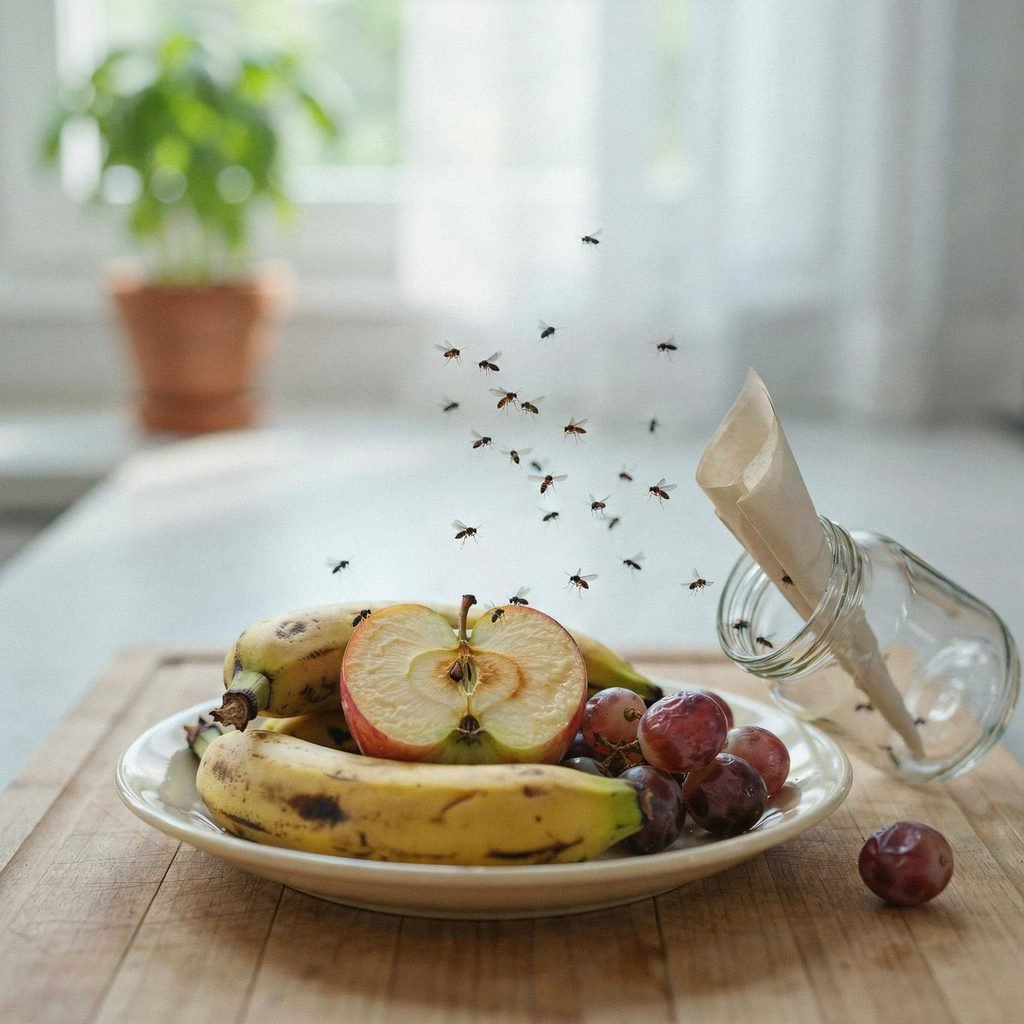
You pour your morning coffee and notice three tiny flying bugs hovering over the fruit bowl. By lunch, a small cloud of gnats swirls above the kitchen sink drain. A few more orbit your bathroom shower drain, and another cluster buzzes around the soil of your favorite pothos plant. Sound familiar?
If you’re dealing with indoor gnats, you’re not alone—and the good news is that you don’t need harsh chemicals to reclaim your space. The first thing to understand is that “gnats” is a catch-all label for several different tiny flying insects. Fruit flies, fungus gnats, and drain flies all get lumped under that name, but each one breeds in a different spot and responds to different treatments. Identifying the source is the single most important step in how to get rid of gnats for good.
This guide walks you through fast removal methods, safe home remedies, long-term prevention habits, and the specific signs that it’s time to call a professional. Let’s get your home gnat-free.
Key Takeaways
- Identify the type. Fruit flies, fungus gnats, and drain flies need different treatments.
- Remove the breeding source. Traps catch adults, but eliminating moisture, overripe fruit, and organic buildup stops the cycle.
- Act quickly. Gnats reproduce fast in warm, damp conditions—addressing the problem within 24–48 hours prevents a full gnat infestation.
- Prevent consistently. Weekly drain cleaning, proper plant watering, and sealed trash keep tiny flying bugs in the house from returning.
What Are Gnats and Why Are They in Your House?
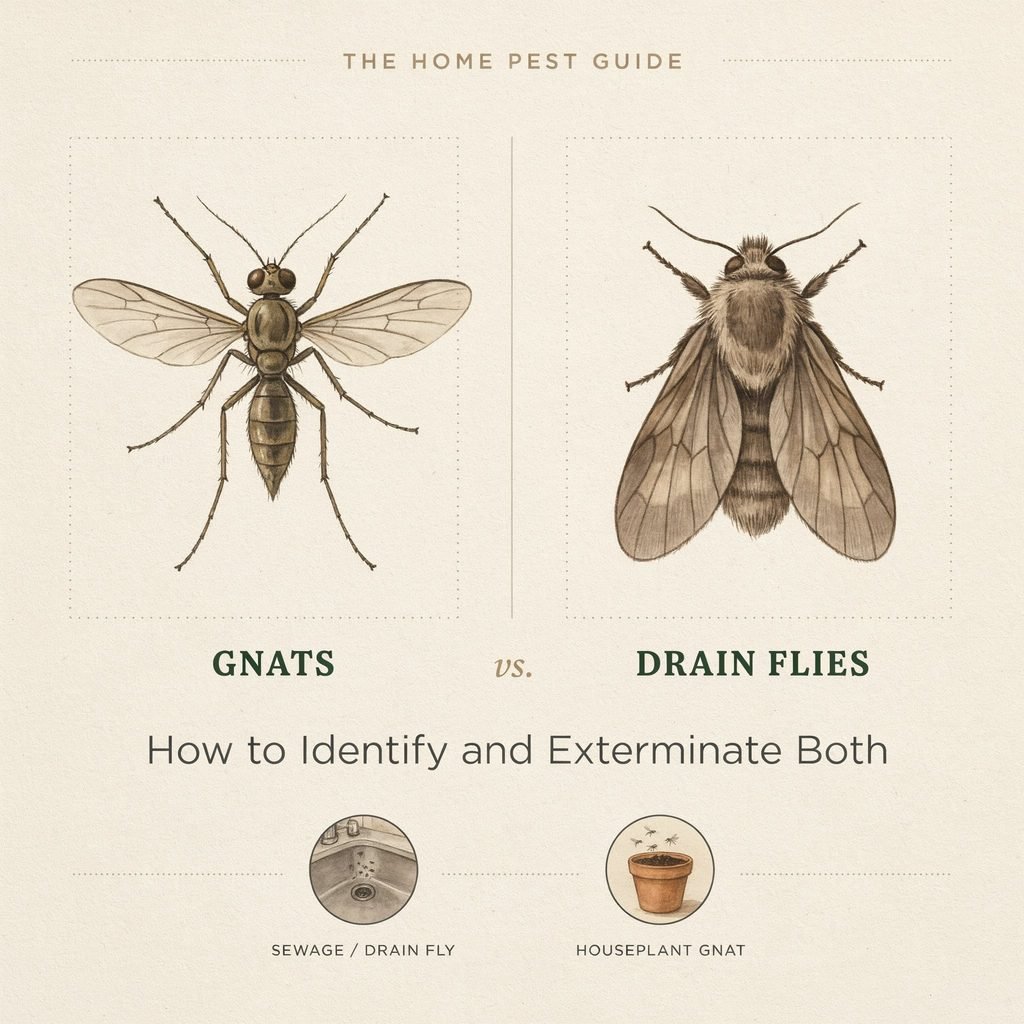
When most Americans say “gnats,” they’re referring to any small flying insect under roughly a quarter-inch long that seems to appear out of nowhere. In reality, the culprits are usually one of three pests: fruit flies (Drosophila), fungus gnats (Sciaridae), or drain flies (Psychodidae). Each one is drawn to a specific combination of moisture and organic material.
The most common indoor sources include:
- Overripe fruit and vegetables left on the counter
- Food spills on countertops, floors, or inside cabinets
- Dirty kitchen sink drains, bathroom drains, and garbage disposals coated in organic biofilm
- Standing water in plant saucers, mop buckets, or pet bowls
- Damp potting soil in overwatered houseplants
- Compost bins and trash cans with food residue
- Pet food left out for extended periods
Gnats multiply quickly because warm, moist environments accelerate their life cycles. A single female fruit fly can lay up to 500 eggs, and those eggs hatch in as little as 24 hours under ideal conditions. Fungus gnat larvae thrive in consistently wet soil, while drain flies lay eggs in the gelatinous biofilm that lines pipes. The warmer your kitchen or bathroom, the faster the population grows.
Identify the Type of Gnat Before You Treat It
Before you start setting traps, take a moment to figure out which pest you’re dealing with. Here’s a quick comparison:
| Feature | Fruit Flies | Fungus Gnats | Drain Flies |
|---|---|---|---|
| Where you find them | Near fruit bowls, trash cans, recycling bins, kitchen counters | Around houseplants, in damp potting soil | In kitchen sink drains, bathroom drains, shower drains, floor drains |
| What attracts them | Fermenting sugars, overripe fruit, food spills, vinegar | Moist soil, decaying organic matter in pots, overwatered houseplants | Organic biofilm, sewage residue, standing water in pipes |
| Appearance / behavior | Tiny, tan or brownish; hover in slow, circling patterns near food | Small, dark, mosquito-like; fly in short bursts near soil surface | Fuzzy, moth-like wings; rest on walls near drains; poor fliers |
| Best first treatment step | Remove fruit, set an apple cider vinegar trap | Let soil dry out, apply yellow sticky traps | Scrub the drain with a brush and enzyme-based cleaner |
Knowing whether you’re facing fruit flies vs. gnats or drain flies vs. fungus gnats saves time and prevents you from treating the wrong source.
How to Get Rid of Gnats Quickly
If you want to know how to get rid of gnats fast, start with these immediate steps. Work through them in order for the best results.
- Remove overripe fruit and store produce in the refrigerator. Eliminate the food source that’s drawing fruit flies in.
- Wipe counters, clean spills, and empty the garbage. Even a small smear of juice or a forgotten banana peel can sustain a population.
- Clean recycling containers and compost bins. Rinse cans, bottles, and jars before tossing them in the bin. Scrub the compost pail with warm, soapy water.
- Set an apple cider vinegar and dish soap trap. Pour about half a cup of apple cider vinegar into a small bowl, add two or three drops of dish soap, and set it near the gnat activity. The vinegar attracts the insects; the soap breaks the surface tension so they sink.
- Make a jar-and-plastic-wrap fruit fly trap. Place a spoonful of apple cider vinegar or a piece of ripe fruit in a jar. Cover the top with plastic wrap, secure it with a rubber band, and poke several small holes with a toothpick. Flies enter but can’t find their way out.
- Place sticky traps for gnats near houseplants. Yellow sticky traps catch adult fungus gnats and help you monitor whether the population is declining.
- Reduce watering and let the top inch of soil dry out. If your plant tolerates it, allow the surface layer to dry between waterings to make the environment less hospitable to fungus gnat larvae.
- Clean sink drains, overflow holes, garbage disposals, and bathroom drains. Use a small drain brush to physically scrub the inside of the pipe, then flush with hot water. Follow up with an enzyme-based drain cleaner according to the product label to break down organic biofilm.
- Empty standing water from plant saucers, buckets, mop pails, pet water dishes, and any other containers where moisture collects.
These steps address adults and breeding sites simultaneously, which is critical for effective gnat control.
Best Home Remedies for Gnats
Once you’ve handled the immediate cleanup, these DIY options help you get rid of gnats naturally without resorting to harsh chemicals.
- Apple cider vinegar trap. Best for fruit flies. Refresh the solution every two to three days.
- Red wine trap. A shallow dish with a small amount of leftover red wine works on the same principle as the vinegar trap.
- Ripe fruit and paper funnel trap. Place a piece of overripe fruit in a jar and roll a sheet of paper into a narrow funnel. Set the funnel in the jar opening, narrow end down. Flies crawl in but struggle to escape.
- Yellow sticky traps. Ideal for monitoring and reducing adult fungus gnats around indoor plants.
- Hydrogen peroxide soil treatment. For fungus gnat larvae, mix one part 3% hydrogen peroxide with four parts water and water the plant as usual. Always check whether your specific plant species tolerates this dilution, and test on a small area first.
- Sand or gravel top dressing. Adding a half-inch layer of coarse sand or fine gravel on top of potting soil discourages adult fungus gnats from laying eggs in damp soil.
- Beneficial nematodes or BTI mosquito bits. For persistent fungus gnat larvae, soak BTI (Bacillus thuringiensis israelensis) mosquito bits in water and use the solution to water affected plants, or apply beneficial nematodes to the soil per the product label. Both target larvae without harming the plant.
Which remedy works for which pest?
- Fruit flies → vinegar traps, wine traps, fruit-and-funnel traps
- Fungus gnats → sticky traps, soil drying, sand top dressing, BTI, nematodes
- Drain flies → mechanical drain brushing, enzyme drain cleaners
A common misconception is that pouring bleach or random household chemicals down the drain will solve the problem. It won’t. Drain flies breed in the sticky biofilm clinging to pipe walls. Unless you physically remove that buildup with a brush and an enzyme-based drain cleaner for gnats, the flies will keep returning.
How to Get Rid of Gnats in Houseplants
Overwatered houseplants are the number-one reason people discover fungus gnats indoors. Constantly damp soil provides the perfect nursery for fungus gnat larvae, which feed on fungi and organic matter in the potting mix.
Follow this step-by-step treatment plan:
- Check soil moisture. Stick your finger about an inch into the soil. If it feels wet, hold off on watering.
- Adjust watering habits. Water only when the top one to two inches of soil are dry. Make sure the pot has drainage holes and that the saucer beneath it doesn’t hold water.
- Remove decaying plant matter. Pull off dead leaves, spent flowers, and any organic debris sitting on the soil surface.
- Use yellow sticky traps to monitor adults. Place one or two traps per pot, sticky side facing up, just above the soil line. Replace them weekly.
- Treat larvae if the problem persists. Apply BTI mosquito bits soaked in water, or introduce beneficial nematodes to the soil. Follow the product label for dosing and frequency.
- Repot only as a last resort. If the soil is constantly soggy or the infestation is severe, repot the plant in fresh, well-draining potting soil. Gently shake off as much old soil as possible from the roots.
Prevention tip: To prevent gnats in indoor plants going forward, avoid overwatering, use pots with adequate drainage, and consider a thin sand top dressing on the soil surface.
How to Get Rid of Gnats in Drains and Bathrooms
Drain flies breed in the gelatinous layer of organic material—called biofilm—that accumulates inside pipes. Kitchen sink drains, bathroom drains, shower drains, garbage disposals, sink overflow openings, and rarely used floor drains are all potential breeding sites.
Weekly drain-cleaning routine:
- Remove the drain stopper or strainer.
- Insert a small, flexible drain brush and scrub the inside walls of the pipe, working the brush up and down several times.
- Flush with hot (not boiling) water for 30–60 seconds.
- Apply an enzyme-based drain cleaner according to the label instructions. Enzymes break down the organic film that chemical cleaners often leave behind.
- Run hot water again the next morning.
Repeat weekly until drain flies disappear, then monthly for maintenance. Pay special attention to the garbage disposal—run it with ice cubes and a little dish soap, then scrub the rubber splash guard where grime collects.
When to suspect a plumbing issue: If you clean the drains thoroughly and drain flies keep reappearing within a few days, there may be a hidden leak, a cracked drain line, or a broken seal allowing organic material to accumulate behind walls or under flooring. In that case, a licensed plumber should inspect the system.
How to Prevent Gnats From Coming Back
Getting rid of gnats is only half the battle. Keeping them away requires a few consistent habits. Use this prevention checklist:
- Keep fruit covered or refrigerated, especially in warm months.
- Take out trash regularly and use bins with tight-fitting lids.
- Rinse cans, bottles, and jars before placing them in recycling.
- Clean drains weekly with a brush and enzyme cleaner.
- Avoid overwatering houseplants; let the top layer of soil dry between waterings.
- Keep compost containers clean and sealed, and empty them frequently.
- Fix leaks promptly and eliminate standing water around the home.
- Clean pet bowls daily and don’t leave wet food out for more than 20–30 minutes.
- Inspect window screens and door seals for tears or gaps that let outdoor gnats inside.
Consistency is the best natural gnat repellent. A clean, dry home simply doesn’t offer the conditions gnats need to breed.
When to Call a Pest Control Professional
Most gnat problems resolve with the cleaning, trapping, and source-removal steps outlined above. However, professional pest control for gnats may be the right move if:
- Gnats keep returning despite thorough cleaning and source removal.
- You suspect a plumbing leak, sewer connection issue, or damaged drain line.
- The infestation is widespread across multiple rooms or floors.
- You cannot locate the breeding source.
- The problem affects a restaurant, rental property, office, or other commercial setting where health codes apply.
A licensed pest control technician can identify hidden breeding sites, apply targeted treatments safely, and coordinate with a plumber if structural issues are involved.
Frequently Asked Questions
What kills gnats instantly?
There is no single method that eliminates every gnat the moment you see it. Sticky traps and vinegar-and-soap traps kill adults on contact, but lasting results require removing the breeding source.
Why do I suddenly have so many gnats in my house?
A sudden spike usually traces back to a new food source or moisture problem: a bowl of ripening fruit, a clogged drain, an overwatered plant, or a hidden spill. Warm weather accelerates breeding cycles, making the population seem to explode overnight.
Does vinegar get rid of gnats?
Apple cider vinegar is highly effective as a trap attractant for fruit flies. It draws adults in, and a few drops of dish soap ensure they can’t escape. However, vinegar alone won’t address larvae in soil or biofilm in drains.
Are gnats harmful to humans?
The common household gnats discussed here—fruit flies, fungus gnats, and drain flies—do not bite, sting, or transmit disease. They are a nuisance and a hygiene concern rather than a direct health threat.
How long does it take to get rid of gnats?
With consistent source removal and trapping, most infestations improve noticeably within three to seven days. Breaking the full breeding cycle, especially for fungus gnats, can take two to three weeks.
Why are gnats flying around my face?
Gnats are attracted to the carbon dioxide you exhale, the moisture around your eyes and mouth, and the salts in sweat. They aren’t targeting you personally; you simply happen to be a warm, moist landmark.
What smell do gnats hate?
Gnats tend to avoid strong scents like peppermint, lavender, eucalyptus, and citronella. While these can serve as mild deterrents, they are not a substitute for removing breeding sources.
Can houseplants cause gnats in the home?
Yes. Overwatered houseplants with consistently damp potting soil are the primary indoor breeding ground for fungus gnats. Adjusting your watering routine and treating the soil resolves the issue in most cases.
Conclusion
Learning how to get rid of gnats doesn’t have to mean reaching for harsh chemicals or expensive services. The fastest, most reliable path is straightforward: identify which type of gnat you’re dealing with, remove the moisture and organic material they’re breeding in, trap the adults, and maintain consistent cleaning habits. Whether the culprits are fruit flies circling your banana bunch, fungus gnats hovering over your fiddle-leaf fig, or drain flies resting beside your bathroom sink, addressing the source is what turns a temporary fix into a lasting solution.
Start with the prevention checklist above, set a simple weekly drain-cleaning reminder, and adjust your plant-watering routine. Traps will help you manage the adults you see today, but removing the breeding ground is what keeps the next generation from hatching. You’ve got this—your kitchen, bathroom, and plant shelf will be gnat-free in no time.