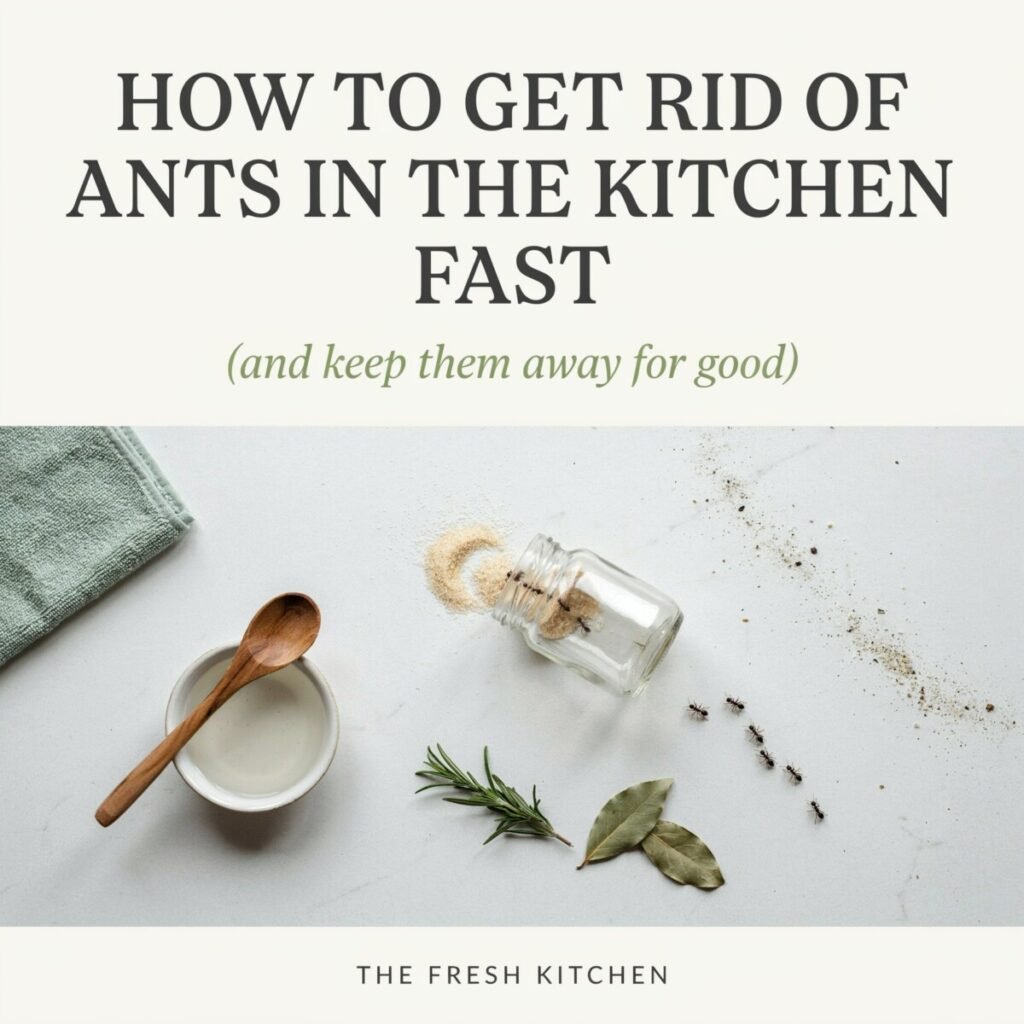
Spotting a line of tiny ants marching across your kitchen counter or swarming near the sink is one of those small household panic moments. You might immediately wonder, why are there ants in my kitchen? The truth is, your kitchen offers the ultimate survival trifecta for pests: accessible food, moisture, and shelter. But don’t panic. The good news is that you can stop them fast and make your kitchen entirely unattractive to future invaders.
This comprehensive guide walks you through exactly how to get rid of ants in the kitchen fast, using immediate action steps to break the ant trail in kitchen spaces. We will cover proven ant bait kitchen solutions, safe natural remedies for ants, and a robust prevention checklist. Whether you are dealing with a minor nuisance or a full-blown ant infestation kitchen crisis, you will find realistic timelines here: immediate steps you can take today, and long-term prevention strategies that keep ants away for weeks and months to come. Let’s get your kitchen back to being a pest-free zone.
Quick, Immediate Steps to Stop an Active Ant Trail
When you first notice an ant trail in kitchen areas, your instinct might be to grab a can of bug spray. However, choosing an ant spray vs bait is a common mistake. Sprays only kill the ants you see on contact and can actually cause the colony to scatter, bud, and multiply. Instead, follow these quick, actionable steps to block and remove ants right now without driving them deeper into your walls.
1. Wipe Up Crumbs and Spills Immediately
Ants are relentless foragers. Start by wiping down counters, sweeping the floor, and removing any standing spills or sticky residue near the sink. Eliminate their immediate food source to stop more scouts from joining the trail.
2. Destroy the Pheromone Trail
Ants navigate using invisible chemical pheromones. If you just sweep them away, their siblings will simply follow the exact same path. Clean the trail thoroughly with soapy water or a 50/50 mix of white vinegar and water. For tougher trails, 70% isopropyl alcohol works wonders to break down the scent markers and disorient the foragers.
3. Seal the Entry Point Temporarily
Follow the trail to see where the ants are entering your home. Once you locate the crack or gap, seal it temporarily using painter’s tape, a dab of caulk, or even a bit of petroleum jelly. This stops the current influx while you prepare longer-term treatments.
4. Deploy Ready-to-Use Ant Baits
Place commercial ant bait kitchen stations near the entry point and along the trail. Unlike sprays, baits are designed to be carried back to the nest. How long does ant bait take to work? You should see a reduction in visible ants within 24 to 48 hours, though complete colony elimination can take up to two weeks.
Safety Note for Pets and Kids: When placing baits, ensure they are tucked behind appliances, inside cabinets, or use enclosed pet-safe ant control stations that prevent little paws and fingers from accessing the active ingredients inside.
Best Ant Baits, Traps, and Products
To truly get rid of ants in kitchen spaces, you need to attack the colony, not just the scouts. This is where the best ant bait for kitchen use comes into play. Ant baits work by combining a slow-acting insecticide with an attractive food source. Worker ants consume the bait, carry it back to the nest, and share it with the queen and the rest of the colony through a process called trophallaxis, eventually wiping out the entire population.
Choosing the Right Bait
Different ants have different dietary preferences depending on the season and species. Some crave sugars, while others seek out proteins or grease.
- Sugar-loving ants: Opt for sweet gel baits or liquid borax-based traps.
- Grease/Protein-loving ants: Look for granular baits or peanut butter-based traps.
If you aren’t sure what they are eating, place a tiny dab of honey and a dab of peanut butter near the trail to see which one they swarm first.
Top Product Types for US Homes
- Borax-Based Liquid Baits: These are incredibly popular and effective for sweet-eating ants. The slow-acting nature of borax (sodium tetraborate) allows workers enough time to return to the nest before dying.
- Hydramethylnon Gel Baits: Highly effective for a wide variety of ants, these gels are excellent for placing in small cracks, crevices, and under cabinets. They disrupt the insect’s ability to produce energy.
- Commercial Ant Gel Stations: Pre-filled, enclosed stations are the ultimate pet-safe option. They keep the active ingredient contained while allowing ants to enter and exit freely.
- Food-Grade Diatomaceous Earth (DE): While not a bait, diatomaceous earth for ants is a great supplementary trap. It’s a natural powder that destroys the ants’ exoskeletons upon contact. Lightly dust it behind the stove or under the fridge.
DIY vs. Calling a Pro
For most standard kitchen invasions, a combination of gel baits and good sanitation will solve the problem. However, if you are dealing with a massive infestation that doesn’t respond to store-bought baits after two weeks, it might be time to consider professional-grade products or an exterminator. Always read the manufacturer’s label carefully and follow EPA-approved instructions for safe application in food preparation areas.
(Image suggestion: A clean kitchen counter showing a commercial ant bait station discreetly placed near a baseboard, with an alt text reading “Pet-safe ant bait station placed near kitchen baseboard” and caption: “Place enclosed ant bait stations near entry points for optimal, safe colony elimination.”)
Natural and Home Remedies That Actually Work
Many homeowners prefer to avoid harsh chemicals, especially in kitchens where food is prepared. But are natural ant remedies effective? The short answer is yes, but with caveats. Natural remedies are generally better at repelling ants and disrupting their trails rather than eliminating the entire underground colony. Here are the evidence-based natural remedies for ants that actually yield results.
Vinegar and Water Spray
As mentioned earlier, a 50/50 solution of white vinegar and water is fantastic for wiping down surfaces. The strong scent masks pheromone trails, confusing foraging ants and encouraging them to look elsewhere.
Soapy Water
A simple spray bottle filled with water and a few drops of dish soap will kill ants on contact by suffocating them. It’s also great for wiping down trails and removing the oily residue ants leave behind.
DIY Borax Ant Bait
You can easily make a borax ant bait at home. Mix 1 part borax with 3 parts sugar, and add enough warm water to create a syrupy consistency. Soak cotton balls in the mixture and place them on small pieces of cardboard near ant activity.
- Safety Precaution: While borax is a natural mineral, it is toxic if ingested in large quantities. Keep your DIY ant trap strictly out of reach of children and pets. If you have toddlers or curious dogs, skip the loose borax and opt for enclosed commercial bait stations instead.
Essential Oils (Peppermint and Lemon)
Ants despise the strong smell of peppermint and citrus. Mix 10-15 drops of peppermint essential oil with water in a spray bottle and mist baseboards and window sills. Note that this is purely a repellent; it won’t kill the nest, but it helps seal gaps to prevent ants from crossing treated thresholds.
Diatomaceous Earth
Diatomaceous earth for ants is a non-toxic, food-grade powder made from fossilized algae. When ants walk through it, the microscopic sharp edges cut their exoskeletons, causing them to dehydrate and die. Sprinkle a thin, barely visible layer in dry areas where ants enter. It loses effectiveness when wet, so avoid using it near the sink or dishwasher.
Long-term Prevention: Kitchen-Proof Your Home
Learning how to prevent ants in kitchen areas is all about making your home inhospitable to pests. Once you’ve eliminated the current invaders, implementing these long-term habits will ensure they don’t return.
Daily and Weekly Cleanliness Habits
Ants can survive on microscopic crumbs. Make it a habit to wipe down counters every night, sweep high-traffic areas, and never leave dirty dishes in the sink overnight. Once a week, pull out the trash, clean under the toaster and microwave, and mop the floors with a vinegar-based cleaner to erase lingering scents. Don’t forget to clean the crumb tray under your oven!
Smart Food Storage (How to keep ants away from pantry)
If you’re wondering how to keep ants away from pantry shelves, the secret is airtight storage. Transfer sugar, flour, cereal, and pet food out of their flimsy cardboard boxes and into hard plastic or glass containers with silicone seals. Ants in pantry spaces are usually drawn to easily accessible spills, so wipe down pantry shelves monthly and consider placing a bay leaf or a cotton ball with peppermint oil on the shelves as a natural deterrent.
Structural Fixes: Seal Gaps to Prevent Ants
Ants can squeeze through gaps as thin as a piece of paper. Inspect your kitchen for entry points. Use silicone caulk to seal gaps to prevent ants around window frames, doorways, and where plumbing pipes enter the walls under the sink. Install weatherstripping under exterior doors and ensure your window screens are free of tears.
Moisture Control
Ants need water just as much as they need food. Fix leaky faucets immediately, wipe up condensation around the sink, and ensure the area under your sink is well-ventilated. If you have a dishwasher, check the base for hidden leaks that might be creating a damp oasis for pests.
Yard and Exterior Maintenance
Prevention starts outside. Trim tree branches and shrubs so they don’t touch your house—these act as natural bridges for ants. Keep mulch, firewood, and compost bins at least 10 feet away from your foundation, and ensure your outdoor trash cans have tight-fitting lids.
(Image suggestion: A neatly organized pantry with dry goods stored in clear, airtight glass jars, labeled with chalk markers. Alt text: “Airtight glass containers to prevent ants in pantry”. Caption: “Airtight containers are your best defense against ants in the pantry.”)
How to Identify Ant Types and Why It Matters
Not all ants are created equal. Knowing exactly what is invading your kitchen can help you choose the most effective bait and determine if your home’s structure is at risk. Here is a quick guide to the most common ants in house kitchen environments across the US.
1. Argentine Ants
- Identification: Small, dark brown to black ants.
- Behavior: They form massive, interconnected colonies and are notorious for creating wide, visible trails. They love sweets and are highly adaptive, making them one of the toughest pests to eradicate. Liquid sugar baits work best.
2. Odorous House Ants
- Identification: Small, brown or black.
- Behavior: True to their name, these ants emit a distinct smell resembling rotten coconut or blue cheese when crushed. They are attracted to both sweets and meats, often nesting near heat sources or water pipes.
3. Pavement Ants
- Identification: Dark brown to black with pale-colored legs and antennae. They often have grooved lines on their heads and thoraxes.
- Behavior: Commonly found entering through cracks in the foundation or slab floors. They have a varied diet, enjoying grease, proteins, and sweets.
4. Carpenter Ants
- Identification: Much larger than typical kitchen ants (up to half an inch), usually black, red, or a combination of both.
- Behavior: Unlike the others, carpenter ants don’t come into the kitchen to forage for your food; they are looking for moisture and wood to excavate. If you see large ants in your kitchen, especially near windowsills or damp wood, you might have a structural issue. They don’t eat wood like termites, but they hollow it out to build nests, which can cause severe damage.
Understanding their diet (sugar vs. protein) and nesting habits allows you to pivot your strategy from simple repellents to targeted colony elimination.
When to Call a Professional
While DIY methods are highly effective for standard nuisance ants, there are times when you need to bring in the heavy artillery. You should hire a licensed exterminator if:
- You have tried baits and sealing for two weeks, but the ant infestation kitchen problem persists or worsens.
- You spot visible nests inside your walls, under flooring, or in ceiling voids.
- You suspect carpenter ants, which require specialized treatment to protect your home’s structural integrity.
- The colony size is overwhelming, indicating a massive outdoor nest continuously funneling ants indoors.
What to expect from a pro: A professional pest control service will conduct a thorough inspection to identify the species and locate the primary nest. They will utilize commercial-grade, EPA-registered baiting systems and perimeter treatments that are far more potent than store-bought options. Most reputable companies also offer follow-up visits and guarantees to ensure the colony is completely eradicated and your home remains protected.
Quick Checklist and Final Tips
Getting rid of ants doesn’t have to be a drawn-out battle. Use this quick two-week action plan to reclaim your kitchen:
Week 1: Eradication
- [ ] Wipe down all trails with soapy water or vinegar to destroy pheromones.
- [ ] Remove all accessible food and water sources.
- [ ] Place ant bait kitchen stations or DIY ant trap near entry points.
- [ ] Monitor bait stations daily and replenish as needed.
Week 2: Prevention
- [ ] Transfer pantry goods into airtight containers.
- [ ] Caulk and seal gaps to prevent ants around windows, doors, and pipes.
- [ ] Trim outdoor vegetation away from the house.
- [ ] Apply a natural repellent (like peppermint oil) along baseboards.
Dealing with ants in house kitchen spaces is frustrating, but with the right combination of immediate action, smart baiting, and rigorous prevention, you can keep your home pest-free.
Ready to pest-proof your home?
Download our free, printable “Two-Week Ant Eradication Checklist” below to stick on your fridge! For more home care tips, check out our guides on [How to Pest-Proof Your Pantry] and [Safe Pest Control for Homes with Pets].
📥 Downloadable Two-Week Ant Eradication Checklist (Infographic
(This copy is designed to be handed to a graphic designer to create a 1-page printable PDF or Pinterest infographic to offer as a lead magnet.)
Title: The Ultimate 14-Day Ant-Free Kitchen Plan 🐜🚫
Phase 1: Stop the Invasion (Days 1–3)
- Day 1: The Great Wipe-Down. Clean all counters, floors, and sinks with a 50/50 vinegar-water solution to erase invisible pheromone trails.
- Day 2: Starve Them Out. Put away all food. Wipe down jars, sweep crumbs, and ensure no dirty dishes are left overnight.
- Day 3: Deploy the Troops. Place enclosed, pet-safe ant baits near entry points. Do not spray bug spray—it will only scatter the colony!
Phase 2: Trap & Eliminate (Days 4–10)
- Days 4-7: Monitor & Replenish. Check baits daily. If the bait is gone, the ants are eating it! Refill as necessary. Keep surfaces dry.
- Days 8-10: The Exterior Sweep. Go outside. Trim bushes touching your house, move mulch away from the foundation, and secure outdoor trash lids.
Phase 3: Fortify & Prevent (Days 11–14)
- Day 11: Pantry Armor. Move flour, sugar, and cereal into heavy-duty airtight glass or plastic containers.
- Day 12: Seal the Fort. Use silicone caulk to seal cracks around baseboards, window frames, and under-sink pipes.
- Day 13: Natural Repellents. Apply a few drops of peppermint oil on cotton balls and place them in the back of cabinets and pantry shelves.
- Day 14: Final Inspection. Check for any lingering ant activity. If clear, celebrate your ant-free kitchen!
Pro-Tip Box: Seeing more ants after placing bait? Don’t panic! This means the bait is working and the colony is sending more workers to collect it. Let them feast!