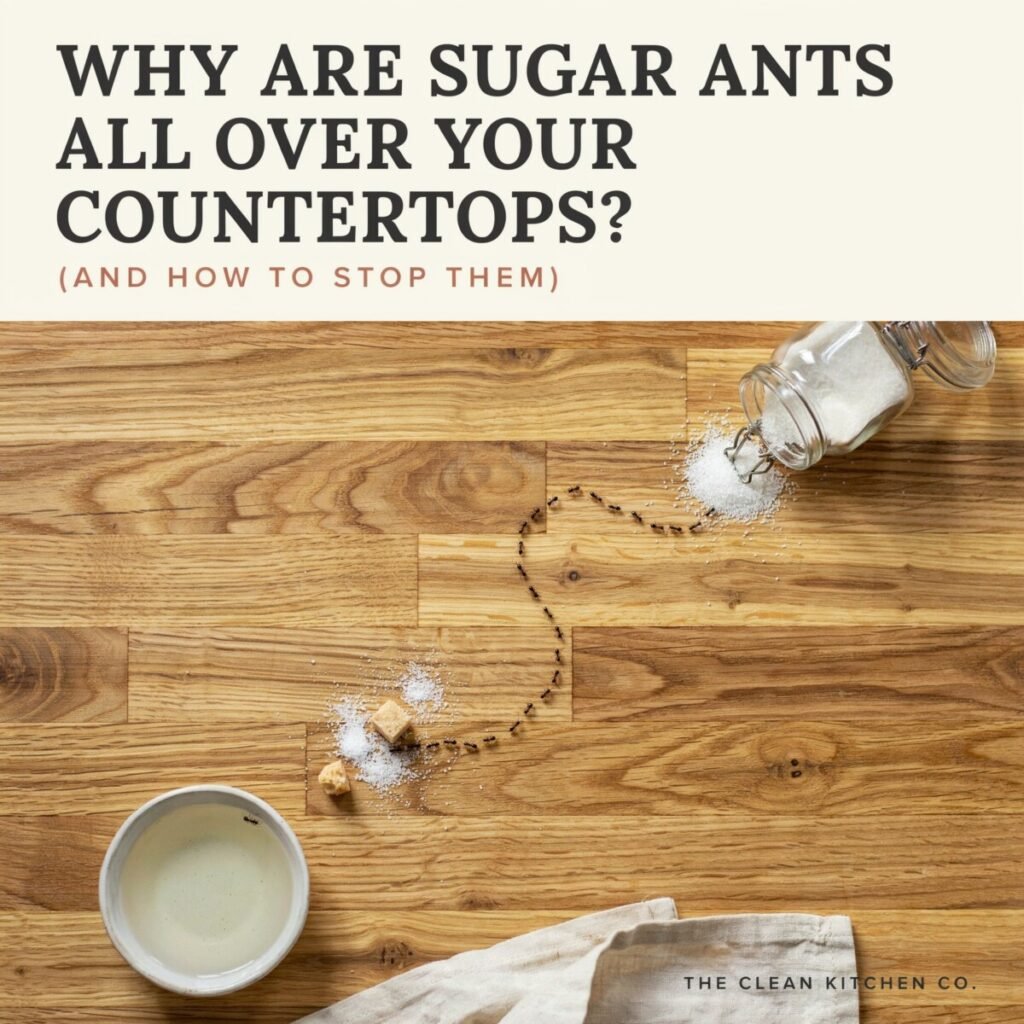
You walk into your kitchen for a midnight snack or a morning coffee, flip on the light, and there they are: a marching line of tiny invaders making themselves right at home on your prep space. Dealing with sugar ants on countertops is one of the most common, yet endlessly frustrating, household nuisances in the United States. No matter how meticulously you try to keep your home clean, these persistent little foragers always seem to find a way inside.
But why do they specifically target your kitchen surfaces, and more importantly, how do you make them leave for good? In this comprehensive guide, we will break down exactly what attracts these pests, the hidden risks they pose to your food, and the most effective ways to evict them. From immediate, science-backed quick fixes to long-term ant infestation prevention strategies, we have you covered. Keep reading to discover actionable DIY solutions, store-bought recommendations, and a handy printable checklist you can use today to finally reclaim your kitchen.
What Are “Sugar Ants”?
The term “sugar ant” is actually a catch-all phrase used by homeowners to describe several different species of small, sweet-loving ants. In the US, when you spot sugar ants in kitchen spaces, you are usually looking at one of three main culprits: tiny black ants, odorous house ants, or pharaoh ants.
Odorous house ants are dark brown or black and emit a distinct, rotten-coconut smell when crushed. Pharaoh ants are much smaller, pale yellow or light red, and notoriously difficult to eradicate. Regardless of the exact species, their biology drives them toward the same resources. They are constantly on the hunt for carbohydrates, sugary residues, and water.
When a single scout ant finds a reliable food source—like a drop of spilled soda or a stray crumb—it leaves behind an invisible chemical path known as a pheromone trail. This trail acts like a highly efficient highway, signaling the rest of the colony to follow. This is why you rarely see just one ant; once the trail is established, hundreds can follow in a matter of hours. Understanding this biology is the absolute first step in learning how to get rid of sugar ants effectively without just treating the symptoms.
Why They Choose Countertops
Countertops are essentially an all-you-can-eat buffet and a luxury hotel combined for these insects. The primary draw is, unsurprisingly, food. Even if you wipe down your surfaces daily, microscopic food crumbs and spills often linger near the stove, toaster, or fruit bowl. Sticky countertops from dried juice, maple syrup, or honey are like glowing neon signs pointing straight to a feast.
Beyond food, moisture and ants go hand-in-hand. Countertops near sinks often harbor tiny puddles or condensation, providing the hydration the colony desperately needs to survive. Furthermore, the ambient warmth generated by nearby appliances like refrigerators, ovens, and dishwashers creates an ideal microclimate, especially during cooler US winters. Easy access points also play a massive role. Windowsills, plumbing penetrations, and gaps under the backsplash provide direct highways from an ant nest near home right into your food prep zone.
Consider a real-world scenario: Last summer, my neighbor found a trail of tiny black ants leading from a sticky cereal box on the counter to a narrow crack by the window. A quick vinegar wipe and moving the food to a sealed container stopped the problem within two days. It is amazing how quickly a single spilled drop of pancake syrup can trigger a full-blown invasion when pheromone trails are involved. Leaving open bags of sugar, unsealed pantry items, or even pet food bowls sitting out overnight invites them right onto your surfaces.
Health Risks and Nuisance Level
While seeing a line of ants is undeniably annoying, the risks go beyond mere aesthetics. Sugar ants are mechanical vectors for bacteria. Because they forage in trash cans, crawl over decaying organic matter, and then march across your cutting boards and utensils, they can easily transfer pathogens like Salmonella, E. coli, and Streptococcus to your food. This cross-contamination poses a genuine food safety risk, making proper ant infestation prevention a matter of household hygiene, not just pest control.
Additionally, certain species pose unique threats. Pharaoh ants, for instance, are notorious for invading sterile environments. In hospitals and medical settings, they have been documented spreading dangerous bacteria. In a home environment, their ability to establish multiple satellite colonies inside wall voids makes them a formidable foe.
There is also the nuisance factor and the psychological toll of an invasion. Discovering ants in your morning coffee or crawling over fresh produce can ruin your appetite and cause significant stress. Furthermore, as colonies grow, they shed debris and leave behind waste that can trigger mild allergic reactions or exacerbate asthma symptoms in sensitive individuals. Evicting them quickly protects both your sanity and your family’s health.
Quick Fixes (Immediate Steps to Stop the Trail)
When you first spot a marching line of invaders, your instinct might be to panic or reach for the nearest bug spray. Fortunately, there are several immediate actions you can take to halt the invasion in its tracks. Here is how to get rid of sugar ants the moment they appear:
- Erase the Pheromone Trail: Ants follow scent, not sight. Wipe down the entire trail, the countertop, and the entry point with a solution of equal parts white vinegar and water, or use warm soapy water. This destroys the chemical map they rely on, leaving the foragers confused and lost.
- Deep Clean the Zone: Sweep, vacuum, and wipe down the immediate area. Eliminate all food crumbs and spills that are actively drawing them in.
- Remove the Attractants: Temporarily relocate fruit bowls, open sugar containers, and pet food dishes to the refrigerator or sealed cabinets.
- Targeted Sprays: For a heavy, visible swarm, you can use a targeted ant spray for countertops. Look for botanical or essential oil-based sprays (like peppermint or citrus) if you prefer natural ant repellents. Always read the label and ensure the surface is safe for food prep once dry.
- Deploy a Homemade Ant Trap: If you want to tackle the colony at its source, create a simple borax ant bait. Mix one part Borax (found in the laundry aisle) with three parts powdered sugar and a few tablespoons of warm water to form a syrup. Place this homemade ant trap in bottle caps or on small pieces of cardboard along the trail. The sugar attracts them, and they carry the slow-acting Borax back to the nest, eventually eliminating the queen.
Safety warning: Keep Borax baits and all chemical sprays strictly out of reach of children and pets.
Long-Term Prevention Strategies
Quick fixes stop the current trail, but to truly ant proof kitchen spaces, you need to implement long-term barriers and habits. Consistent clean kitchen habits are your first and most reliable line of defense.
Master Sealed Food Storage: Transfer cereals, grains, and sweets from flimsy cardboard boxes into hard plastic or glass containers with silicone gaskets. Sealed food storage starves out foragers who make it inside and removes the scent trails that draw them in.
Manage Your Waste: Use an ant-proof trash can with a tight-fitting lid. Rinse out soda cans, juice bottles, and sticky jars before tossing them into the recycling or garbage bin, and wash the trash can itself regularly to remove residue.
Eliminate Moisture: Fix leaky faucets, wipe down wet sinks before bed, and ensure your dishwasher isn’t pooling water. Moisture and ants are a bad combination; a dry sink is a strong deterrent.
Implement Ant Exclusion Techniques: Inspect the perimeter of your kitchen. Use high-quality silicone caulk to seal gaps around windowsills, door thresholds, and where plumbing pipes enter the wall. These ant exclusion techniques physically block the highways into your home. Silicone is preferred over acrylic caulk because it does not shrink or crack over time.
Outdoor and Perimeter Maintenance: Keep mulch, firewood, and dense vegetation trimmed back at least 18 inches from your home’s foundation to discourage an ant nest near home. For an organic barrier, apply diatomaceous earth for ants along exterior foundation lines and interior baseboards. This fine powder damages their exoskeletons, causing them to dehydrate. When applying, use a bulb duster to apply a barely visible, fine layer. Ants won’t walk over heavy piles of powder, so a light dusting is crucial for them to track it back to the nest. (Use food-grade DE and wear a mask when applying).
Seasonal Ant Activity and Apartment Living: In the US, seasonal ant activity usually peaks in the spring and summer as colonies expand and forage aggressively. However, in the winter, they often move indoors seeking warmth. If you are an apartment dweller, coordinate with your landlord to seal exterior building cracks, and rely heavily on tenant-friendly gel baits and indoor diatomaceous earth to protect your specific unit. If your unit is infested, it is highly likely your neighbors are dealing with the same issue; a unified building-wide approach is often necessary.
Finally, always seek out pet-safe ant solutions to ensure your long-term prevention plan doesn’t harm your four-legged family members.
Best Baits and Products (Recommended Options)
When DIY traps aren’t cutting it, commercial products offer a more concentrated approach. Choosing the right ant bait for sugar ants depends on understanding active ingredients and how ant colonies feed.
Borax and Sodium Tetraborate Gels: These are excellent for sweet-loving ants. The slow-acting nature of the poison ensures the worker ants live long enough to carry the toxic syrup back to the colony and share it via trophallaxis (regurgitation), effectively poisoning the queen.
Hydramethylnon and Fipronil Baits: Often found in commercial gel tubes or enclosed plastic stations, these are highly effective against stubborn species like odorous house ants and pharaoh ants. Enclosed stations are particularly useful because they protect the bait from drying out and keep it securely away from curious pets and children.
Natural and Essential Oil Sprays: Products utilizing peppermint, clove, or citrus oils disrupt pheromone trails and kill on contact. While great for immediate cleanup and as natural ant repellents, they do not provide a “transfer effect” to kill the hidden nest.
A Crucial Warning on Aerosols: Never use standard contact sprays (like RAID) on sugar ants, especially if you suspect Pharaoh ants. These sprays only kill the visible foragers and cause the surviving colony to panic and “bud,” splitting into multiple new nests inside your walls. Always rely on slow-acting baits rather than repellent sprays for long-term eradication.
The Decision Guide: If you are dealing with a minor, seasonal trail, DIY borax ant bait or a natural spray is highly effective and budget-friendly. However, if you are facing a persistent infestation where ants keep returning week after week, it is time to step up to commercial-grade enclosed bait stations or consider calling in the experts.
When to Call a Professional
Sometimes, despite your best efforts with vinegar wipes and gel baits, the invaders just keep coming back. Knowing when to wave the white flag and call an exterminator for ants can save you time, money, and frustration.
You should strongly consider professional pest control if:
- You wipe out a trail, but a new one forms in a different spot days later.
- Ants emerge from electrical outlets or deep drywall cracks, indicating hidden colonies inside your walls.
- You identify the pests as Pharaoh ants (which require specialized baiting) or wood-destroying carpenter ants.
- Ants are nesting inside major appliances like your dishwasher or refrigerator motor.
A licensed professional will conduct a thorough inspection to locate the primary nest, apply commercial-grade, non-repellent insecticides that ants unknowingly track back to the colony, and perform structural exclusion to prevent future entry.
Sugar Ant Prevention Checklist
Keep your kitchen ant-free year-round by saving this checklist. Run through these steps weekly or monthly:
Daily:
- Wipe counters and the stovetop with a vinegar or all-purpose cleaner after dinner.
- Sweep or vacuum kitchen floors to eliminate stray crumbs.
- Dry the sink completely; ensure no standing water remains.
Weekly:
- Empty trash and recycling; wipe the inside of the ant-proof trash can if sticky.
- Remove overripe fruit from countertop bowls.
- Wash pet bowls daily and store dry pet food in sealed bins.
Monthly:
- Audit pantry seals; ensure all sealed food storage containers are tightly closed.
- Caulk new gaps around windows, doors, and plumbing pipes.
- Replace commercial bait stations or refresh DIY traps every 2–3 weeks to keep them potent.
Conclusion
Dealing with sugar ants on countertops can feel like an endless battle, but the truth is that most infestations are highly preventable. By combining immediate trail-erasing tactics with smart, long-term ant infestation prevention habits, you can easily reclaim your kitchen. Remember, consistency is key: small daily cleaning habits paired with targeted, slow-acting baits solve the vast majority of household ant problems. Save or print the checklist above, stay vigilant during peak seasonal ant activity, and enjoy a clean, pest-free kitchen all year long!