Picture this: You walk into your kitchen on a lazy Saturday morning to brew a fresh cup of coffee, only to find a highly organized marching line of tiny black ants trailing across your countertop. They are heading straight for the sugar bowl, a dropped piece of fruit, or the pet food dish in the corner. It is a frustrating scenario that millions of US homeowners face every single year. When dealing with an unexpected invasion of kitchen ants, your first instinct might be to grab the nearest household item to fight back. For many, that item is a standard bottle of white vinegar from the pantry.
But does vinegar kill ants, or is it just another internet myth perpetuated by endless DIY blogs? With countless videos touting home remedies for ants, it can be incredibly hard to separate scientific fact from fiction. Is vinegar for ants a miracle solution that will protect your home, or is it just a temporary fix that leaves you dealing with the exact same problem a week later?
In this comprehensive guide, we are putting popular DIY methods to the test. We will explore the fascinating science behind how to get rid of ants naturally, compare white vinegar ant control to other common household items, and help you figure out exactly when it is time to abandon the DIY route and call in the licensed professionals.
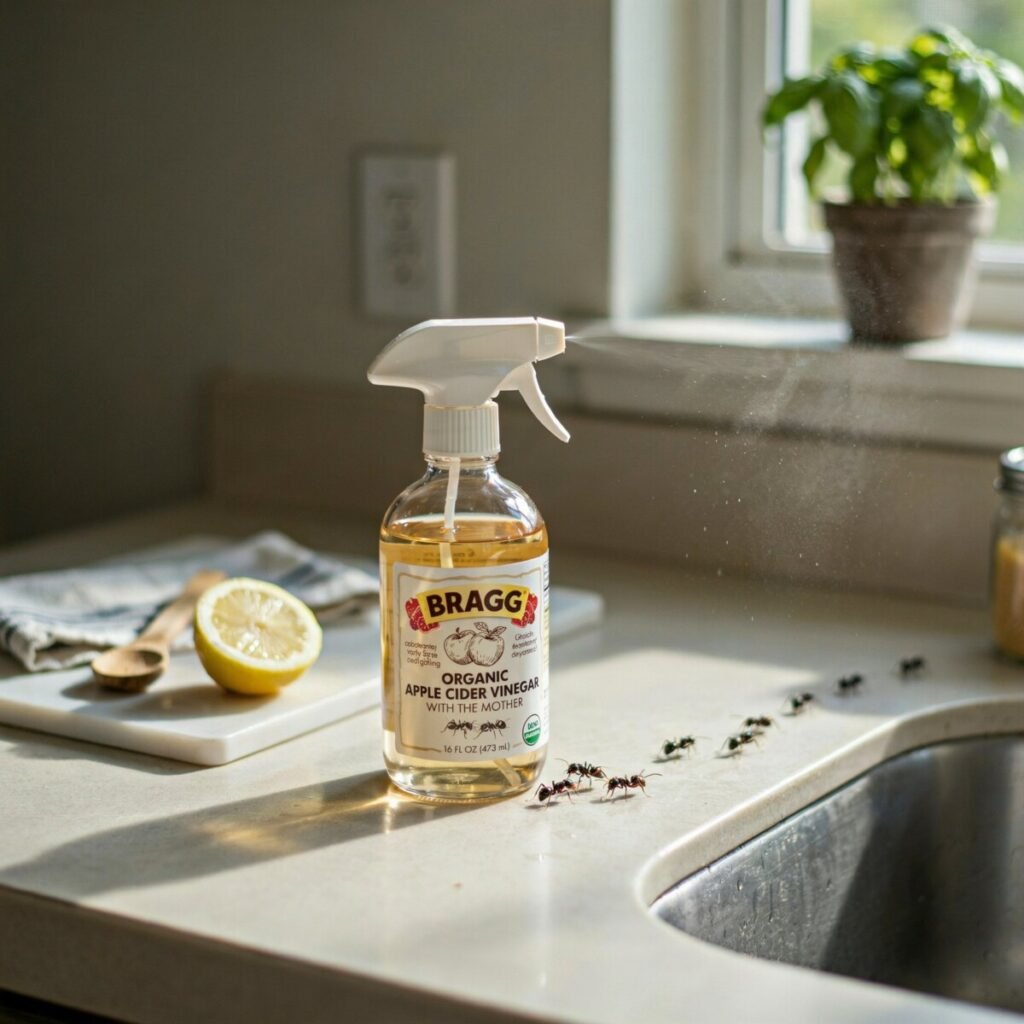
How Vinegar Affects Ants: The Science Explained
To truly understand whether vinegar works as an ant infestation treatment, we first need to understand how ants operate and communicate. Ants are highly social, incredibly organized insects that rely on complex chemical signals to survive. When a solitary scout ant finds a reliable food source in your home, it doesn’t just eat and leave. On its way back to the nest, it presses its abdomen to the ground, leaving behind a chemical trail of pheromones.
Other worker ants detect this invisible highway using their highly sensitive antennae and follow it straight to your kitchen. As more ants travel the path, the pheromone trail becomes stronger, resulting in the massive, organized lines we find so frustrating.
This is exactly where vinegar enters the picture. The strong smell and highly acidic nature of vinegar act as a powerful masking agent. When you spray vinegar for ants, the acetic acid completely obliterates those delicate pheromone trails. Confused and suddenly unable to follow their scent map, the ants lose their direction and wander aimlessly.
Furthermore, the overwhelming odor of vinegar acts as a strong natural ant repellent. Ants rely heavily on their sense of smell to navigate, locate food, and communicate with the rest of the colony. A strong cloud of vinegar overwhelms their sensory receptors, making your kitchen a highly unappealing place to forage. However, it is crucial to understand the vital difference between disrupting a temporary trail and actually eliminating the root threat. Masking a scent trail might stop the ants currently in your kitchen, but it does absolutely nothing to the thousands of ants hiding safely inside your walls.
Does Vinegar Actually Kill Ants?
Now for the million-dollar question: does vinegar kill ants? The short answer is yes, but with a major catch that every homeowner needs to understand.
Vinegar can kill ants on contact, but it does not work in the same systemic way a commercial pesticide does. If you spray an ant directly with a heavy, soaking mist of pure white vinegar, the acid can interfere with its respiratory system. Ants do not have lungs; instead, they breathe through tiny holes along the sides of their bodies called spiracles. If the vinegar coats their exoskeleton and clogs these spiracles, the insect will eventually suffocate. Additionally, if an ant is submerged or heavily drenched in a vinegar and water solution, it can easily drown.
However, using vinegar as a DIY ant killer in this manner is highly inefficient. You have to physically see the ants, aim the spray, and thoroughly drench them to ensure they die. Even if you manage to kill 50 ants on your kitchen floor, you are only killing the foraging workers. The queen, who is safely tucked away deep inside the nest, continues to lay hundreds of eggs every single day.
This is why vinegar for ants is primarily a repellent and a trail disruptor rather than a true exterminator. If your ultimate goal is complete ant colony removal, spraying the visible foraging workers with vinegar simply will not get the job done. The colony will quickly realize the current trail is compromised, create a brand-new pheromone route, and send a fresh batch of workers into your home a few days later.
Identifying the Invaders: Common Household Ants
Before you start spraying vinegar for ants all over your baseboards, it helps to know exactly what you are dealing with. Not all ants are the same, and their unique behaviors can dictate which ant infestation treatment will actually work.
Sugar Ants (Odorous House Ants)
Often referred to simply as sugar ants, these tiny black or brown ants are the most common kitchen ants in the United States. They are highly attracted to sweets, grease, and moisture. Because they have massive colonies with multiple queens, they are notoriously difficult to eradicate with simple home remedies for ants. If you spray them with a harsh repellent, they can easily split their colony into several smaller groups to survive.
Carpenter Ants
These are much larger than standard kitchen ants and can cause severe structural damage by tunneling through damp or decaying wood to build their nests. If you see large black ants, especially wandering around at night, white vinegar ant control will be entirely ineffective. You need professional pest control tips and commercial treatments immediately to prevent costly home repairs.
Pavement Ants
Commonly found nesting in cracks in driveways, sidewalks, and foundation slabs, pavement ants often march indoors to search for greasy or sweet foods. They are highly adaptable and can easily bypass DIY repellents by finding new cracks under your door sweeps or through weep holes in your brickwork.
White Vinegar Ant Control vs. Other Home Remedies
If vinegar is mostly a repellent, how does it stack up against other popular home remedies for ants? Let’s test the competition to see which DIY methods are worth your time.
Baking Soda and Powdered Sugar
Baking soda is often mixed with powdered sugar to create a lethal bait. The sugar attracts the ants, and the baking soda reacts with the natural acids inside the ant’s digestive system. This reaction produces carbon dioxide gas that the insect cannot expel, causing it to rupture from the inside. While this can actually kill ants on contact (or shortly after ingestion), it is messy and not always reliable, as some ant species are smart enough to avoid the unnatural powdery mixture.
Dish Soap and Water
A simple mixture of water and liquid dish soap is a fantastic ant spray homemade solution for killing ants on contact. The soap breaks down the waxy, protective layer on the ant’s exoskeleton, causing it to rapidly dehydrate and suffocate. It is highly effective for wiping out the ants you can see, but like vinegar, it offers no residual protection and does nothing to the hidden main colony.
Lemon Juice
Lemon juice contains d-limonene, an acidic compound that is toxic to ants and can destroy their scent trails. It works very similarly to vinegar but leaves behind a much more pleasant, fresh citrus scent. However, lemon juice is sticky due to its natural sugars and can actually attract other pests, like fruit flies, if not wiped up properly.
Cinnamon
Cinnamon acts as a fantastic natural ant repellent. Ants absolutely hate the strong smell and the fine powdery texture, which can interfere with their ability to breathe and navigate. Sprinkling ground cinnamon or using cinnamon essential oil near entry points can deter ants. The downside? It is strictly a deterrent. It will not kill the colony, and ground cinnamon can easily stain your carpets or create a mess on your countertops.
Peppermint Oil
Like cinnamon, peppermint essential oil is a powerful repellent. The strong menthol scent overwhelms the ants’ olfactory senses. Mixing a few drops of peppermint oil with water and spraying it around windowsills and door frames is an excellent safe ant control for homes with pets and children. Again, this is strictly for repelling and preventing entry, not for exterminating an existing colony.
Borax and Sugar Baits
Out of all the home remedies for ants, borax is arguably the most effective for actual ant infestation treatment. When mixed with a sweet bait like sugar water, honey, or peanut butter, worker ants happily carry the toxic borax back to the nest and feed it to the queen and the larvae. Because borax acts slowly, the ants have enough time to share it with the entire colony before they die. This is one of the few DIY methods that can lead to true ant colony removal, though it must be used with extreme caution around pets and small children, as borax is toxic if ingested.
The Best Way to Use Vinegar for Ants
Even if vinegar isn’t a silver bullet for ant colony removal, it is still a highly valuable, multi-purpose tool in your indoor ant control arsenal. Here is how to use it safely and effectively.
The Ultimate DIY Vinegar Ant Spray Recipe
To make an effective ant spray homemade, mix equal parts standard white vinegar and water in a clean spray bottle. Standard white vinegar (5% acidity) works perfectly fine, though some homeowners prefer “cleaning vinegar” (6% acidity) for a slightly stronger punch. If you want to boost its repellent power, add 10 to 15 drops of peppermint, lemon, or tea tree essential oil. Shake the bottle well before every single use.
Where and How to Apply
Spray the solution directly onto visible ant trails, baseboards, windowsills, door thresholds, and any visible cracks or crevices where ants might be entering your home. Let it sit for a few minutes to break down the pheromones, then wipe it away thoroughly with a clean microfiber cloth. This not only drowns the ants on contact but completely erases their invisible highway.
Safety and Surface Considerations
While white vinegar ant control is generally considered safe ant control for homes, the acetic acid can etch, dull, or strip the sealant off certain natural stone surfaces like granite, marble, and quartz. Always test a small, inconspicuous area first, and avoid using it on stone countertops. Additionally, while vinegar is non-toxic to humans, its strong, pungent smell can irritate the sensitive noses of cats and dogs. Ensure the room is well-ventilated when you spray, and consider using milder essential oils if your pets are prone to respiratory sensitivities.
Why Home Remedies Often Fail Against a Full Infestation
Home remedies for ants are fantastic for dealing with the occasional scout ant or a minor seasonal nuisance. But if you are dealing with a full-blown, deeply entrenched infestation, DIY methods will almost always fall short.
Why? Because the ants you see represent only a tiny fraction of the total population—often less than 10%. By the time you notice a thick trail of kitchen ants, the colony has likely been growing inside your walls, under the floorboards, or just outside your foundation for months.
Furthermore, using harsh repellents can trigger a survival mechanism known as “budding.” When certain species (like Pharaoh ants) sense a threat from strong chemicals or overwhelming scents like heavy concentrations of vinegar, the colony will intentionally split into multiple smaller groups and scatter deeper into your walls. Instead of solving the problem, improper indoor ant control can accidentally turn one manageable problem into five separate, hidden infestations. Repellents only treat the symptoms, not the disease. You might successfully drive the ants away from your kitchen counter, but they will simply find a new entry point and invade your bathroom or pantry instead.
When to Call a Pest Control Professional
So, when is it time to abandon how to get rid of ants naturally and call in the licensed experts? Look out for these undeniable red flags:
- Constant Reappearance: You wipe out a trail with vinegar, but a new, equally thick one appears a few days later in the exact same spot.
- Multiple Locations: You are seeing ants in several different rooms simultaneously, indicating multiple satellite colonies or a massive central nest inside the structure.
- Wood Damage: You notice sawdust-like material (known as frass) near wooden structures, baseboards, or window sills. This is a primary sign of destructive carpenter ants.
- Outdoor Mounds: You spot large, active ant mounds near your home’s foundation or close to your HVAC units.
- Nocturnal Activity: You hear a faint rustling sound inside your walls at night, or see large ants roaming after dark.
Professional exterminators have access to commercial-grade, slow-acting baits, non-repellent liquid treatments, and specialized diagnostic equipment that can track the ants back to their hidden source. They provide lasting pest control tips and treatments that ensure complete, permanent ant colony removal.
Proven Ant Prevention Tips for Your Home
Whether you rely on vinegar or professional services, the absolute best ant infestation treatment is proactive prevention. Keep your home ant-free year-round with these actionable ant prevention strategies:
- Seal Entry Points: Inspect the exterior of your home and use high-quality silicone caulk to seal cracks around windows, doors, and utility pipes. Install door sweeps on all exterior doors.
- Eliminate Food Sources: Wipe down counters daily with a vinegar solution, sweep floors, and store pantry items like sugar, cereal, and baking supplies in airtight glass or hard plastic containers.
- Manage Pet Food: Pet food bowls left out overnight are a massive magnet for ants. A great trick is to draw a line of vinegar around the bowl or place the dish inside a larger shallow dish of soapy water (creating a “moat”) to form an impenetrable barrier.
- Manage Trash: Take out the garbage regularly, rinse out recyclable cans and bottles before tossing them, and ensure your indoor and outdoor bins have tight-fitting lids.
- Control Moisture: Ants need water to survive. Fix leaky faucets immediately, ensure your gutters are draining properly away from the foundation, and use a dehumidifier in damp basements or crawl spaces.
- Trim Landscaping: Keep tree branches, shrubs, and thick mulch pulled back at least a few feet from your home’s exterior to eliminate the natural “bridges” ants use to easily access your house.
Conclusion: Is Vinegar Worth Using?
So, does vinegar really kill ants? Yes, it can kill them on contact through suffocation or drowning, but its true superpower lies in its ability to disrupt pheromone trails and act as a highly effective, temporary, natural repellent. For a sudden, minor intrusion of kitchen ants, white vinegar ant control is a remarkably cheap, accessible, and safe ant control for homes with kids and pets.
However, if you are facing a persistent, large-scale, or destructive infestation, vinegar is only a temporary band-aid. To achieve true ant colony removal, you will likely need to step up to slow-acting borax baits or call a licensed pest control professional. Use vinegar as your first line of defense and a fantastic daily cleaning tool to erase scent trails, but do not be afraid to bring out the heavy artillery when the situation demands it.
Frequently Asked Questions (FAQ)
Does vinegar kill ants instantly?
Not exactly. If you drench an ant in pure, undiluted vinegar, it can suffocate and die within a few minutes as the acid clogs its respiratory spiracles. However, a diluted spray might only slow them down or simply wash away their scent trails without killing them outright.
Is white vinegar good for ants?
White vinegar is excellent for erasing pheromone trails and acting as a natural deterrent. It is one of the most accessible and affordable home remedies for ants, though it is much better used as a preventative repellent and surface cleaner than a colony-killing pesticide.
What home remedy kills ants fastest?
A mixture of liquid dish soap and water kills ants the fastest on contact by breaking down their exoskeleton and causing rapid dehydration and suffocation. For killing the entire hidden colony, slow-acting borax and sugar baits are the most effective, though they take several days to a few weeks to fully work.
Why do ants keep coming back after vinegar?
Ants keep coming back because vinegar only kills the visible foraging workers and temporarily masks their scent trails. The queen remains safely in the nest, continuing to reproduce. Once the strong vinegar smell fades, new workers will simply establish a brand-new pheromone trail into your home.
What is the best natural ant repellent?
Peppermint essential oil and cinnamon are widely considered the best natural ant repellent options. Their strong, overwhelming scents effectively mask food odors and confuse the ants’ navigation systems, keeping them out of your living spaces without the use of harsh, synthetic chemicals.