For millions of homeowners across the United States, particularly in the South and Southwest, enjoying a sunny afternoon in the backyard comes with a hidden hazard: the red imported fire ant. Stepping on or brushing against a fire ant mound can quickly turn a relaxing day into a painful ordeal. Unlike common nuisance ants, these aggressive insects swarm and attack in large numbers, delivering a venomous sting that leaves lasting physical reminders.
While they are technically stings, most people search for information on fire ant bites when looking for relief. A single encounter can result in dozens of painful welts, intense burning, and severe itching that lasts for days. Beyond the immediate physical discomfort, an active fire ant infestation poses a significant threat to the safety of children playing in the grass and pets exploring the yard.
This comprehensive guide serves as both a first-aid manual and a lawn pest control handbook. We will break down exactly what these stings look and feel like, outline the most effective fire ant sting treatment protocols, and provide actionable strategies for fire ant control for lawns. Whether you are currently dealing with a painful reaction or looking to reclaim your turfgrass from these invasive pests, this guide has you covered.
What Fire Ant Bites Look and Feel Like
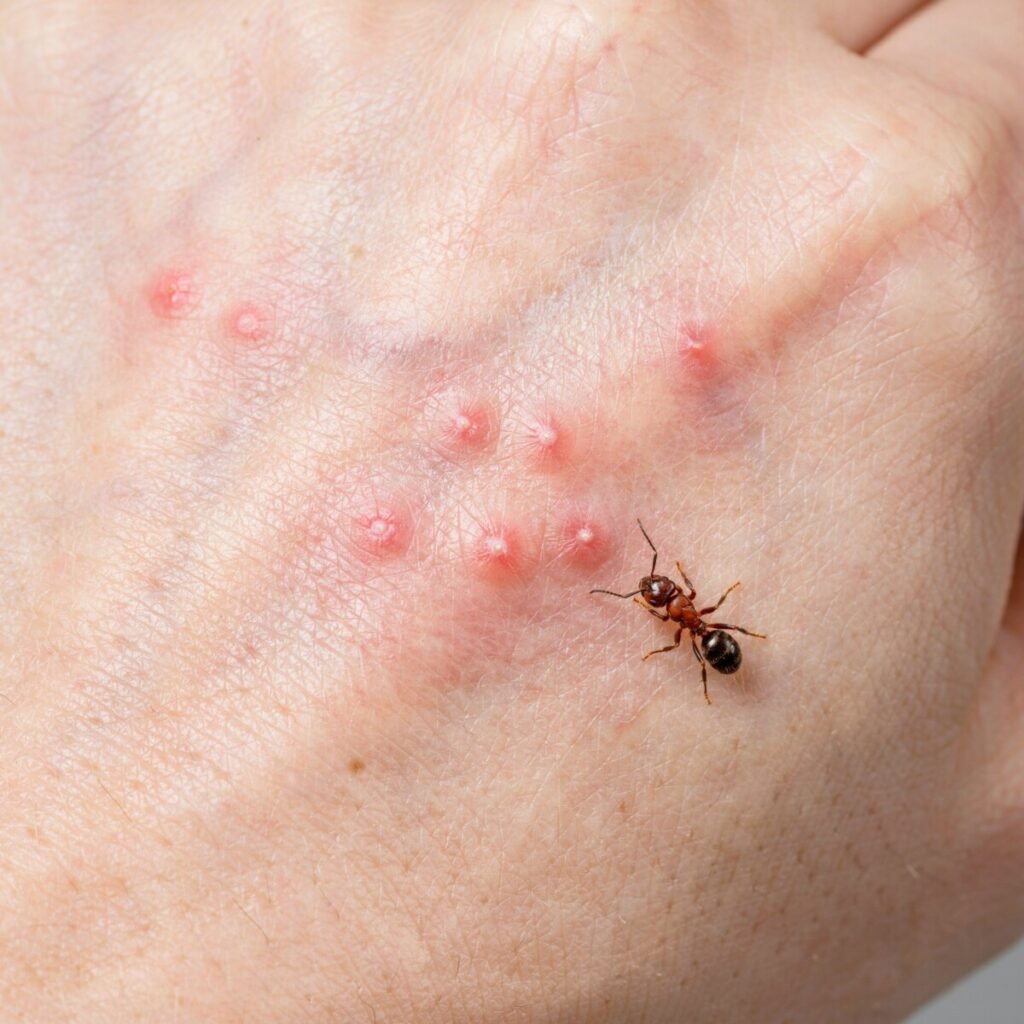
To properly treat these injuries, it helps to understand the mechanics of the attack. When people refer to fire ant bites, they are actually talking about stings. The ant uses its mandibles (jaws) to bite down on the skin, anchoring itself securely. It then arches its body and inserts a stinger located on its abdomen, injecting a toxic venom called solenopsin. Because the ant is anchored by its bite, it can pivot and sting the victim repeatedly in a circular pattern.
The immediate sensation is intense, sharp, and hot—hence the name “fire” ant. Within minutes, the affected area will develop a red fire ant sting marked by raised, inflamed welts.
The Progression of the Sting
The visual appearance of the sting changes rapidly over the first 24 to 48 hours:
- Immediate Reaction: Bright red, raised bumps accompanied by localized swelling and a fierce burning sensation.
- Within 24 Hours: The welts begin to cloud over, forming a distinct fire ant bite blister or pustule. This blister is filled with dead white blood cells and venom alkaloids. It looks remarkably like a whitehead or a chickenpox blister.
- Days 3 to 10: The blister will eventually dry out, form a scab, and fade. During this time, the area often transforms into a fiercely itchy fire ant sting, which can be incredibly difficult to ignore.
Understanding this progression is vital because the appearance of a white pustule often leads people to mistakenly believe the wound is infected, when in fact, it is the normal, expected result of the venom’s interaction with human tissue.
Fire Ant Bite Symptoms
The severity of fire ant bite symptoms can range from a mild, localized nuisance to a life-threatening medical emergency. Reactions generally fall into three categories: mild local reactions, large local reactions, and systemic allergic reactions.
Mild to Moderate Symptoms
For the vast majority of people, a sting results in a localized reaction. Symptoms include:
- Intense burning and pain at the site of the sting.
- Localized redness and swelling.
- The formation of sterile pustules (blisters).
- Persistent itching that peaks 24 to 48 hours after the encounter.
Large Local Reactions (LLR)
Some individuals experience a Large Local Reaction. In these cases, the swelling extends far beyond the immediate sting site. For example, a sting on the ankle might cause the entire lower leg and foot to swell dramatically. A swollen fire ant bite of this magnitude can be painful, restrict joint movement, and take up to a week or more to fully subside. While alarming, LLRs are generally not life-threatening but may require medical intervention to manage the swelling and discomfort.
Severe Allergic Reactions (Anaphylaxis)
According to medical experts, including the Cleveland Clinic and Ochsner Health, a small percentage of the population is highly allergic to fire ant venom. Fire ant allergy symptoms can escalate rapidly and require immediate emergency medical attention. Warning signs of anaphylaxis include:
- Hives or widespread itching on areas of the body not stung by the ants.
- Swelling of the face, lips, tongue, or throat.
- Dizziness, lightheadedness, or a sudden drop in blood pressure.
- Difficulty breathing, wheezing, or a feeling of a closing throat.
- Nausea, vomiting, or severe abdominal cramping.
⚠️ MEDICAL SAFETY DISCLAIMER: If you or a family member experience any signs of a severe allergic reaction, such as trouble breathing, facial swelling, or dizziness after encountering fire ants, call 911 or seek emergency medical care immediately. Anaphylaxis is a life-threatening emergency that requires the immediate administration of epinephrine (EpiPen) and professional medical treatment.
Best Home Remedies for Fire Ant Bites
Knowing how to treat fire ant bites quickly can significantly reduce pain, minimize swelling, and prevent secondary infections. The goal of home remedies for fire ant bites is to neutralize the immediate discomfort and manage the itching as the blisters form.
Here is a step-by-step guide to effective at-home care:
1. Wash the Area Immediately
As soon as you realize you have been stung, wash the affected area thoroughly with mild soap and cool water. This removes any lingering venom on the surface of the skin, dirt, and bacteria, reducing the risk of infection if the skin has been broken by the ant’s mandibles.
2. Apply a Cold Compress
To combat the burning pain and reduce the initial swelling, apply an ice pack or a cloth wrapped around ice to the sting site. Use the cold compress in intervals: 15 minutes on, 15 minutes off, for the first few hours. Elevating the stung limb (such as propping up a stung foot on a pillow) can also help drain fluid and reduce a swollen fire ant bite.
3. Use Over-the-Counter Topicals
Once the area is clean and dry, apply a soothing topical treatment to calm the itchy fire ant sting.
- Hydrocortisone Cream (1%): Reduces inflammation and suppresses the localized immune response causing the itch.
- Calamine Lotion: Provides a cooling sensation and helps dry out the area.
- Antihistamine Creams: Topical Benadryl or similar creams can provide localized itch relief.
4. Take Oral Antihistamines
For widespread stings or to help you sleep through the intense nighttime itching, an oral antihistamine (like cetirizine, loratadine, or diphenhydramine) is highly effective. This blocks the histamine receptors in your body that trigger the itching and swelling associated with fire ant bite symptoms.
5. Soothe with an Oatmeal Bath
If you have been swarmed and are dealing with dozens of stings across your body, a colloidal oatmeal bath can provide widespread, full-body relief. The anti-inflammatory properties of finely milled oatmeal soothe irritated skin and take the edge off the burning sensation.
🛑 What NOT to Do: Do Not Pop the Blisters!
The most crucial rule of fire ant sting treatment is to leave the fire ant bite blister completely alone. The pustule acts as a natural, sterile biological bandage protecting the damaged tissue underneath. If you pop, scratch, or pick at the blister, you introduce bacteria from your fingernails into the wound. This frequently leads to secondary bacterial infections (such as staph or strep), which can result in scarring, require prescription antibiotics, and take much longer to heal than the original sting.
When to See a Doctor
While most fire ant bites can be managed safely at home, certain situations require professional medical evaluation.
Seek medical care if you notice signs of secondary infection, which typically occur a few days after the sting if the blister was broken. Signs of infection include:
- The redness begins to spread outward in streaks.
- The area becomes increasingly hot to the touch and highly sensitive.
- Yellow or green pus begins to drain from the wound (distinct from the initial clear/white sterile venom fluid).
- You develop a fever or swollen lymph nodes.
Consult an allergist if you have experienced a Large Local Reaction or suspect you may be developing an allergy to the venom. An allergist can perform testing and, if necessary, prescribe an epinephrine auto-injector or recommend venom immunotherapy (allergy shots) to build long-term tolerance.
Why Fire Ants Are a Lawn Problem
Transitioning from first aid to lawn pest control, it is essential to understand why these pests are so destructive to outdoor spaces. The Red Imported Fire Ant (RIFA) is an invasive species that thrives in the warm, humid climates of the US South, though their range continues to expand.
Fire ants build massive, subterranean colonies that can house upwards of 500,000 workers and multiple queens. Unlike other ants that build distinct, hardened anthills, fire ant mounds in turfgrass are often fluffy, dome-shaped piles of loose soil. They prefer open, sunny areas, making your manicured lawn, garden beds, and the edges of sidewalks prime real estate.
The primary danger is their aggressive defense mechanism. When a mound is disturbed—even by a lawnmower, a child’s toy, or a dog’s paw—hundreds of ants swarm out instantly. They climb vertical surfaces rapidly, crawling up legs and arms to find bare skin. This makes a heavy fire ant infestation a severe liability for homeowners, effectively rendering parts of the yard unusable for recreation and posing a constant threat to vulnerable family members and pets.
Lawn Elimination Tips
Figuring out how to get rid of fire ants requires a strategic approach. Simply pouring household chemicals down a mound is rarely effective and can be environmentally hazardous. Because fire ant colonies extend deep underground and can have multiple queens, effective fire ant treatment for yard spaces usually requires a combination of methods.
Pest control experts generally recommend the “Two-Step Method” for comprehensive fire ant control for lawns.
Step 1: Broadcast Bait Treatments
The foundation of any good yard ant treatment is the use of insecticidal baits. Baits consist of a slow-acting poison combined with a food attractant (usually soybean oil and corn grits).
- How it works: Worker ants forage for the bait, carry it back into the deep tunnels of the mound, and feed it to the larvae and the queens.
- Why it’s effective: Because the poison is slow-acting, the worker ants don’t associate the food with the deaths of their colony members, allowing the poison to reach the queens and ultimately collapse the entire colony.
- Application: Broadcast the bait evenly across the entire lawn using a fertilizer spreader in the late afternoon or evening when ants are actively foraging and the sun won’t degrade the bait.
Step 2: Individual Mound Treatments
A few days to a week after broadcasting the bait, target the remaining visible, active mounds with a fast-acting contact insecticide.
- Options: This can be in the form of liquid drenches, granular mound treatments, or aerosol injections specifically labeled for fire ant mound removal.
- Application: Apply the treatment directly to the mound according to the manufacturer’s instructions. This quickly eliminates the immediate threat of the visible nest while the broadcast bait continues to work on the broader, hidden fire ant infestation.
Consistent lawn pest control requires repeating the broadcast bait application once or twice a year (typically in spring and fall) to catch newly mated queens attempting to establish new colonies.
Natural Fire Ant Control Options
Many homeowners seek safe pest control for families and pets, leading to a surge in interest regarding natural fire ant control methods. While natural remedies exist, it is vital to understand their limitations; they rarely eliminate a colony entirely and are best used as supportive measures or spot treatments.
- Boiling Water: Pouring 2 to 3 gallons of boiling water directly onto a mound can kill the colony about 60% of the time. However, this method is highly dangerous. Carrying heavy pots of boiling water across an uneven lawn where ants are swarming is a recipe for severe thermal burns. Furthermore, boiling water will instantly kill the surrounding turfgrass, leaving a dead patch in your lawn.
- Diatomaceous Earth (DE): Food-grade DE is a natural powder made from fossilized algae that damages the exoskeletons of insects, causing them to dehydrate. While it can kill individual ants that walk through it, it loses its effectiveness the moment it gets wet from dew or rain, making it a poor choice for long-term outdoor ant protection.
- Citrus Oils and Botanical Drenches: Products containing d-limonene (citrus oil) or clove oil can kill ants on contact and disrupt their scent trails. These are excellent for treating a single mound on a patio but will not penetrate deeply enough to eradicate a mature colony’s queens.
- Beneficial Nematodes: These microscopic worms can be applied to the soil with a hose-end sprayer. They seek out and infect ant pupae and larvae. While safe for the environment, results can be inconsistent and highly dependent on soil moisture levels.
Ultimately, while natural methods can suppress populations, scientifically formulated baits remain the most reliable and environmentally targeted way to achieve total pest control for fire ants.
Preventing Future Fire Ant Problems
The most effective fire ant sting treatment is avoiding the sting altogether. Implementing robust fire ant prevention habits will keep your family safe and reduce the need for frequent chemical interventions.
- Routine Yard Inspections: Make it a habit to walk your property and scan for new mounds, especially after heavy rainfall. Rain forces fire ants to build their mounds higher to escape flooding, making them highly visible and easier to treat before they grow massive.
- Dress for the Occasion: When doing yard work, gardening, or playing in the grass, wear closed-toe shoes, thick socks, and work gloves. Tuck pant legs into socks if you are working in heavily infested, overgrown areas.
- Manage Yard Debris: Fire ants love to nest under objects that retain moisture and heat. Keep piles of firewood, mulch, leaf litter, and landscaping timbers away from the foundation of your home and high-traffic play areas.
- Protect Pets: Inspect your dog or cat’s outdoor bedding and doghouses regularly. If you live in a high-risk area, consult your veterinarian about topical flea and tick preventatives, as some of these products also offer a degree of repellency or protection against ants.
- Seal the Home: While fire ants prefer the outdoors, they will invade homes seeking food or escaping extreme heat and drought. Seal cracks in your foundation, ensure window screens are intact, and keep kitchen surfaces meticulously clean to deter foraging scouts.
Conclusion
Dealing with fire ant bites is a painful rite of passage for many US homeowners, but it doesn’t have to be a constant struggle. By recognizing the symptoms of a sting, treating the fire ant bite blister with care, and utilizing oral antihistamines and cold compresses, you can effectively manage the pain and itching at home. However, always remain vigilant for signs of severe allergic reactions or secondary infections, and never hesitate to seek professional medical care when necessary.
Ultimately, the best defense against these aggressive pests is a proactive offense in your yard. By adopting the Two-Step Method for fire ant control for lawns—combining broadcast baits with targeted mound treatments—you can drastically reduce the fire ant infestation in your turf. Consistent monitoring, smart prevention habits, and targeted lawn pest control will help you reclaim your outdoor spaces, ensuring that your yard remains a safe, enjoyable haven for your family and pets rather than a hazardous minefield.
Frequently Asked Questions (FAQ)
What do fire ant bites look like?
Fire ant stings initially appear as raised, red, inflamed welts that burn intensely. Within 24 to 48 hours, these welts develop into cloudy, white, pus-filled blisters (pustules) that resemble chickenpox or small whiteheads.
How long do fire ant stings last?
The initial burning pain usually subsides within a few hours, but the intense itching and swelling can last for several days. The white blisters typically take 7 to 10 days to dry up, scab over, and heal completely, provided they are not popped or scratched.
What is the best home remedy for fire ant bites?
The best immediate home remedy is to wash the area with soap and water, apply a cold compress to reduce swelling, and take an oral antihistamine. Applying 1% hydrocortisone cream or calamine lotion will help soothe the intense itching as the blisters form.
How do I get rid of fire ants in my yard?
The most effective way to eliminate fire ants is the “Two-Step Method.” First, broadcast a slow-acting fire ant bait across your entire lawn so worker ants carry the poison to the queens. Then, a week later, treat any remaining visible mounds individually with a fast-acting liquid or granular contact insecticide.
Are fire ant bites dangerous?
For most people, fire ant stings are painful and itchy but not dangerous. However, they can be highly dangerous to individuals with severe venom allergies, potentially triggering anaphylaxis (difficulty breathing, throat swelling, dizziness), which is a life-threatening medical emergency. They also pose an infection risk if the blisters are popped and exposed to bacteria.
What is the best fire ant treatment for lawns?
Insecticidal baits containing slow-acting active ingredients (like indoxacarb, hydramethylnon, or spinosad) are considered the best and most environmentally sound treatment for lawns. They target the colony’s food supply and the queens, providing long-term control without requiring heavy, broad-spectrum chemical sprays across your entire property.