Spotting a wasp nest near your front door, under the eaves, or somewhere in the yard can be genuinely alarming. The good news is that careful observation, the right protective steps, and a realistic sense of your own limits go a long way toward reducing risk. This guide walks you through how to remove a wasp nest safely, when a DIY approach makes sense, and when calling a licensed pest-control professional is the smarter move.
Important first note: If anyone in your household has a history of a severe allergic reaction to wasp stings, or if small children, pets, or older adults are regularly near the nest, treat the situation as high risk from the start. The same goes for large nests, hidden nests inside walls or attics, and ground-level colonies. In those cases, professional wasp exterminator services are the safest option.
Disclaimer: Always follow local regulations, product labels, and manufacturer safety instructions. The information here is general guidance and does not replace professional advice. Wasp stings carry inherent risk, and no method eliminates that risk entirely.
What Does a Wasp Nest Look Like?
Knowing which insect you’re dealing with shapes every decision that follows. Here are the most common stinging insects found around US homes:
- Paper wasps build open, umbrella-shaped combs made of papery fiber. You’ll typically spot a paper wasp nest under roof eaves, porch ceilings, shed rafters, or along deck railings.
- Yellow jackets construct enclosed paper nests, often tucked into wall voids, attics, crawl spaces, dense shrubs, or underground burrows. Yellow jacket nest removal tends to be more involved because colonies can contain thousands of aggressive workers.
- Hornets (including bald-faced hornets common in the eastern US) produce larger, enclosed, football-shaped gray paper nests, frequently found in trees, bushes, sheds, or high along rooflines.
- Mud daubers create small mud tubes or clumps on walls and under overhangs. They are generally less aggressive, but caution is still wise.
A critical distinction: Bees—especially honey bees—are not wasps. Honey bees are beneficial pollinators and are often protected by local ordinances. If the insects look fuzzy, rounded, and are visiting flowers, contact a local beekeeper or pest control company before taking any action. Proper identification always comes first.
Signs You Have a Wasp Nest Nearby
Sometimes the nest itself is hidden, so recognizing signs of a wasp nest matters just as much as seeing one. Watch for:
- A steady stream of wasps entering and exiting the same crack, vent, hole, or ground opening.
- A visible papery structure under eaves, on outdoor furniture, or beneath a deck.
- Buzzing sounds inside walls, ceilings, attics, or behind siding.
- Wasps hovering around garbage cans, pet food bowls, fruit trees, outdoor drinks, or the grill.
- A sudden uptick in wasp activity in one section of your yard.
To observe safely, watch from a distance during daylight hours. Don’t swat at the insects, and never stand directly in front of or block an entrance point. Noting how far wasps travel from nest sites—often 300 to 1,000 feet for foraging—can help you trace their flight path back to the colony.
How to Find a Hidden Wasp Nest
If you see wasps but can’t locate the colony, use this cautious, step-by-step inspection method:
- Watch flight patterns from a distance. Stand at least 15–20 feet away and note the direction wasps repeatedly fly.
- Follow the travel line. Wasps tend to fly in fairly straight paths between foraging sites and the nest.
- Check common nesting areas. Look under eaves, soffits, behind shutters, in deck spaces, sheds, attic vents, wall gaps, fence posts, dense bushes, hollow trees, and small ground holes.
- Listen for buzzing. In quiet moments, press your ear near a wall or listen at an attic hatch. A persistent hum can reveal a hidden colony.
- Never insert objects into openings, spray randomly, tape over holes, or shine a flashlight directly into an entry point. These actions can provoke a defensive swarm.
If your inspection points to a wasp nest in the wall, chimney, attic, roof void, or another space you can’t easily access, stop there. That situation usually requires professional pest control for wasps.
Decide Whether DIY Removal Is Safe
Before you pick up a can of wasp spray, honestly assess the situation. Use the table below as a quick reference.
| Lower-Risk (DIY May Be Reasonable) | High-Risk (Call a Professional) |
|---|---|
| Very small, visible paper wasp nest | Large, active nest with heavy traffic |
| Nest easily reached from the ground | Yellow jackets or hornets |
| Minimal wasp activity | Ground wasp nest / underground colony |
| No known sting allergy in the household | Nest inside walls, attic, vents, chimney, or siding |
| No ladder or roof access needed | Nest requiring a ladder or roof work |
| Multiple nests on the property | |
| Aggressive behavior or frequent stings | |
| Children, pets, older adults, or allergic individuals nearby |
If your situation falls into the high-risk column, the recommendation is direct: contact a licensed pest-control professional. DIY wasp nest removal in these scenarios significantly raises the chance of multiple stings and injury.
📞 When to Call a Professional
Call a licensed pest-control company if the nest is large, hidden inside a structure, underground, belongs to yellow jackets or hornets, requires a ladder, is near high-traffic areas, or if anyone in the household has a known wasp sting allergy. Waiting a day or two for a professional is far safer than a rushed, risky removal.
What to Wear and Prepare Before Wasp Nest Removal
Protective clothing for wasp removal won’t make a dangerous nest safe, but it reduces exposed skin during a lower-risk treatment. Gather the following:
- Long-sleeved shirt, long pants tucked into socks
- Closed-toe shoes or boots
- Thick work gloves
- Safety glasses or goggles
- A hat with a brim; a beekeeper-style veil if available
- A fully charged cell phone in your pocket
- A clear, unobstructed retreat path to indoors or a vehicle
- An EPA-registered wasp and hornet spray labeled for the specific use you intend
- A flashlight only for safe walking, not for illuminating the nest directly
Keep children, pets, and bystanders indoors and well away from the area. Remember: improvised protection does not eliminate the risk of stings, especially with aggressive species.
Safest Time to Treat a Wasp Nest
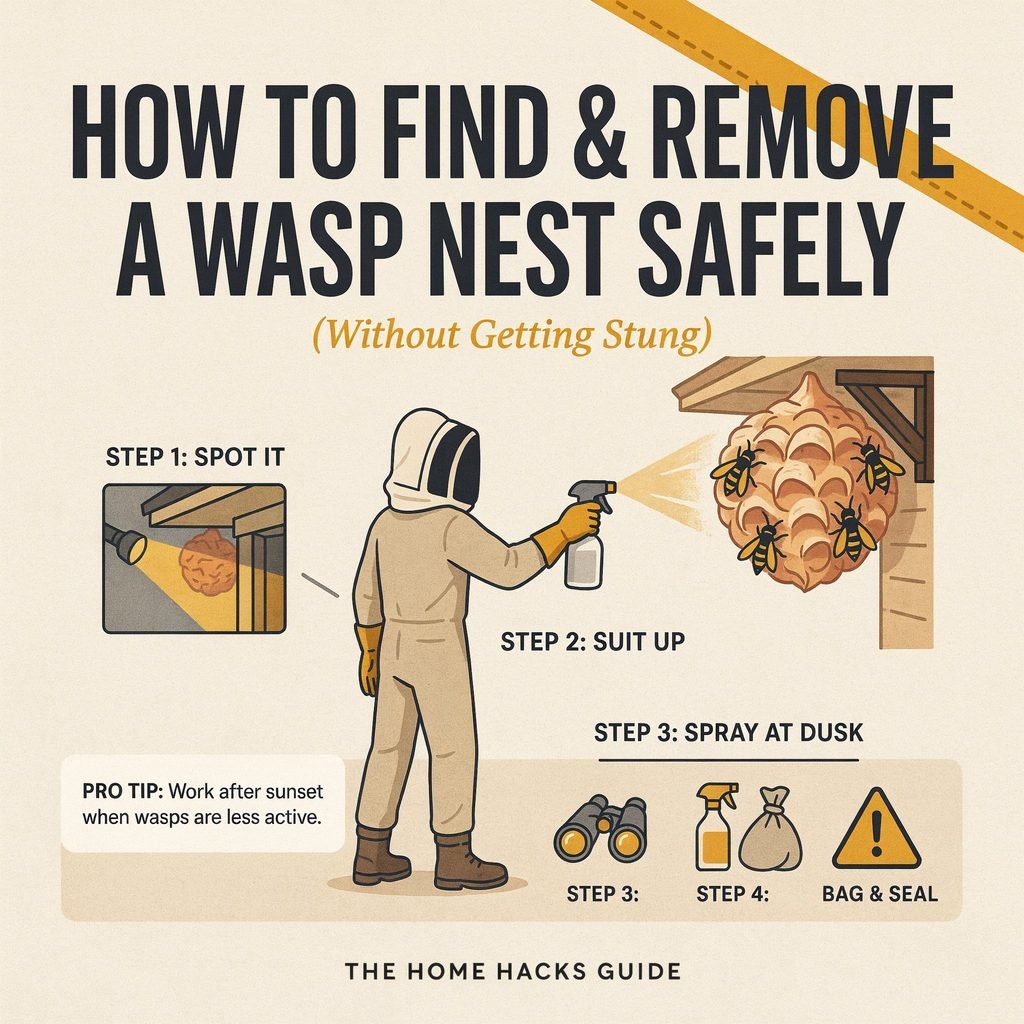
The safest time to remove a wasp nest is generally early morning or late evening. During these cooler, darker periods, most worker wasps are inside the nest and activity levels are lower, which reduces the chance of encountering a large number of flying insects.
Before you begin, read the insecticide label thoroughly. Some products specify temperature ranges, wind limits, or application distances. Avoid treating on windy, rainy, or extremely hot days, and do not approach if wasps are already highly active and agitated.
How to Remove a Small, Visible Wasp Nest Safely
This process applies only to lower-risk situations outlined above. Always follow the product label as the primary authority.
- Read the entire insecticide label before opening the can. Confirm it is EPA-registered and labeled for wasps or hornets.
- Identify your escape route and make sure the path is clear.
- Apply the product exactly as directed, maintaining the distance specified on the label. Aim only where the label instructs. Do not stand directly beneath the nest.
- Leave the area immediately after application. Walk—don’t run—along your planned route.
- Wait the label-recommended time (often 24 hours) before checking for activity. Do not repeatedly approach the nest to “check.”
- If activity continues, do not re-spray repeatedly. Contact a professional wasp exterminator.
- Once there is confirmed zero activity, carefully remove the nest using a long-handled tool. Place it in a sealed heavy-duty trash bag and dispose of it according to local waste guidelines.
- Clean the area with soap and water, then inspect for gaps or openings that could attract future nests.
Never use a ladder for nest treatment. A startled reaction while elevated greatly increases the danger.
What Not to Do When Removing Wasps
These actions can provoke aggressive wasps, cause structural damage, or create fire hazards. Avoid them entirely:
- Do not knock down an active nest with a broom, stick, hose, or rake.
- Do not burn a nest or use fire, gasoline, kerosene, or any flammable liquid.
- Do not flood a ground nest; this agitates yellow jackets without eliminating the colony.
- Do not seal an active wall or siding entry hole. Trapped wasps may chew through drywall and enter your living space.
- Do not use a ladder near an active nest.
- Do not attempt removal while intoxicated, overly tired, or completely alone.
- Do not rely on homemade remedies (vinegar, soap water, smoke) for large or hidden colonies.
How to Handle Wasp Nests in Difficult Locations
Wasp Nest in Siding or Wall
Do not caulk, foam, or seal the opening while the colony is active. Trapped wasps can push through interior finishes. Contact pest control to treat the void properly, then seal entry points for wasps after the colony is confirmed dead.
Wasp Nest in Attic or Roof
Avoid entering a confined attic space or disturbing insulation around a nest. Limited escape routes make a wasp nest in the attic especially dangerous. Seek professional help.
Wasp Nest in the Ground
Ground wasp nest removal is high risk. Yellow jackets can swarm in large numbers from a single burrow. Keep people and pets away, mark the area, and call an exterminator.
Wasp Nest in a Tree
A small, low, inactive nest may be manageable with caution. Large or elevated hornet nests in trees require professional equipment and expertise.
Wasp Nest Near a Door, Deck, Pool, or Dining Area
Because the chance of accidental contact is high, prioritize fast, professional removal rather than waiting for the colony to grow.
What to Do If You Get Stung
Even with precautions, stings can happen. Basic wasp sting safety steps include:
- Move away from the area calmly to avoid further stings.
- Wash the sting site gently with soap and water.
- Apply a cold pack wrapped in a cloth to reduce swelling and discomfort.
- Consider over-the-counter pain relief or an antihistamine only as directed on the product label or by a healthcare professional.
Seek emergency medical help immediately if you or someone nearby experiences trouble breathing, facial or throat swelling, dizziness, widespread hives, vomiting, or any signs of an anaphylactic allergic reaction to a wasp sting. Call 911 or your local emergency number without delay.
How to Prevent Wasps From Returning
Getting rid of one nest doesn’t guarantee wasps won’t rebuild. These wasp nest prevention steps reduce the odds:
- Seal entry points for wasps around siding, soffits, windows, utility penetrations, vents, and roof edges during fall and winter when colonies are inactive.
- Repair damaged window screens and weatherstripping.
- Keep trash cans tightly lidded and rinse recyclables before binning.
- Clean outdoor eating areas, grills, and spills promptly.
- Pick up fallen fruit from trees and shrubs.
- Store pet food indoors rather than on porches or patios.
- Inspect eaves, sheds, decks, attic vents, and outdoor structures regularly in spring and early summer when queens scout for new nest sites.
- Remove abandoned wasp nests during the colder season where it is safe and locally permitted.
- Consider scheduling professional seasonal inspections if your property has a history of recurring wasp problems.
For more on keeping pests out of upper-level spaces, see our guide on [how to keep pests out of your attic]. To close off common ground-level gaps, check out [how to seal gaps around exterior doors]. And if yellow jackets keep crashing your cookouts, read [best ways to keep yellow jackets away from your patio].
Frequently Asked Questions
How do I know if a wasp nest is active?
Watch for steady wasp traffic entering and leaving the nest, audible buzzing, and visible insects on the comb surface. An abandoned wasp nest will show no traffic, may look weathered or torn, and typically has no insects present.
Can I remove a wasp nest during the day?
It is possible but riskier. Wasps are more active and more numerous outside the nest in daylight. Early morning or late evening is the safer window. If daytime removal is unavoidable, exercise extra caution or call a professional.
Will wasps come back after the nest is removed?
The original colony won’t rebuild the exact same structure, but the pheromone residue and suitable shelter can attract new queens the following spring. Removing the nest, cleaning the surface, and sealing nearby gaps helps discourage return visits.
Should I seal a hole where wasps are entering my wall?
Not while the colony is active. Sealing an entry traps wasps inside, and they may chew through drywall into your home. Have the colony treated by a professional first, then seal the opening afterward.
How much does professional wasp nest removal cost?
Costs vary by region, nest location, and species, but many homeowners in the US pay roughly $150 to $500 for a standard treatment. Hard-to-reach nests in attics, walls, or high rooflines can push the price higher. Request at least two written estimates.
Are wasps more aggressive at certain times of year?
Late summer into early fall is typically peak aggression. Colonies are at their largest, food sources dwindle, and workers become more defensive. Exercise extra caution during this period.
Can I leave a small wasp nest alone?
If the nest is small, in a low-traffic area, and no one in the household has a sting allergy, monitoring from a distance is an option. However, colonies grow quickly in warm months, so revisit the decision regularly.
How long does it take for wasp spray to work?
Many EPA-registered wasp and hornet sprays begin affecting insects within minutes, but the label may advise waiting up to 24 hours before assessing whether the colony is fully eliminated. Always follow the specific product’s directions.
Final Thoughts: Prioritize Safety Over Savings
Learning how to remove a wasp nest safely starts with honest self-assessment. A small paper wasp comb under a porch railing is a very different challenge from a yellow jacket colony behind your siding or a hornet nest thirty feet up in an oak tree. For the small, visible, low-traffic nests, careful preparation, proper protective clothing, and strict label compliance can make DIY wasp nest removal manageable. For everything else—large nests, hidden nests, ground colonies, aggressive species, or any household member with a sting allergy—hiring a licensed pest-control professional is not an overreaction. It is the responsible choice.
No amount of saved money is worth a trip to the emergency room. Observe first, plan carefully, follow every product label, and when in doubt, pick up the phone and call the pros. Your family’s safety is the one thing no wasp nest is worth gambling with.